
In ancient Vedic culture, the number three held great significance. However, in the later Vedic period, we observe the number three being replaced by the number four. The number three was prominent 3,000 years ago when the Vedic hymns were composed, but 2,000 years ago, as the Vedic culture gave way to temple rituals the number four became more popular.
In the Rig Veda, three worlds were imagined: the heavens, the atmosphere, and the earth. Gods are seen as inhabiting the sky, the middle space, and the earth. This was created when Indra separated the sky (Dyaus) from the earth (Prithvi). While Soma was on the earth and Indra in the sky, Agni connected the two. The Vedic world had three texts known as the Vedic Trayi. This is mentioned in Buddhist texts too. Matter had three attributes (guna): Satva, Tamas, and Rajas. Ayurvedic texts said health demanded balance of the three humours (dosha): Vata, Pitta, and Kapha. There were only three divisions of people: Brahmanas, Rajanya, and the common man, Vish.
After the rise of Buddhism, the world changed dramatically. The old Vedic ways were no longer popular. A new form of Hinduism emerged, and it was marked by the composition of the Dharma-shastra texts and the great epics the Mahabharata and the Ramayana. Now, three gives way to four.
We have the concept of Chatur Yuga, the four ages of the world; Chatur Varna, or the four categories of human beings; and Chatur Varga, or the four aims of life: Dharma, Artha, Kama, and Moksha, representing the pursuit of responsibility, success, pleasure, and freedom. The fourth yuga, Kali yuga, was used to explain the changes in Hinduism and the rise of new gods and shift from the yagna ritual to the temple ritual. The four varna categorisation helped the Brahmins classify all communities such that they were always on top.
This is also when, instead of three Vedas, we have four, with the addition of the Atharva Veda. God is seen as Chatur Mukha, facing the four directions, and Chatur Bhujah, having four arms that extend to the cardinal directions. The game of chess gains popularity with Chaturanga, representing the four arms of the army: infantry, cavalry, elephants, and chariots. The three worlds of the Vedas get a new addition–the Patala, the nether region, home of Nagas and Asuras.
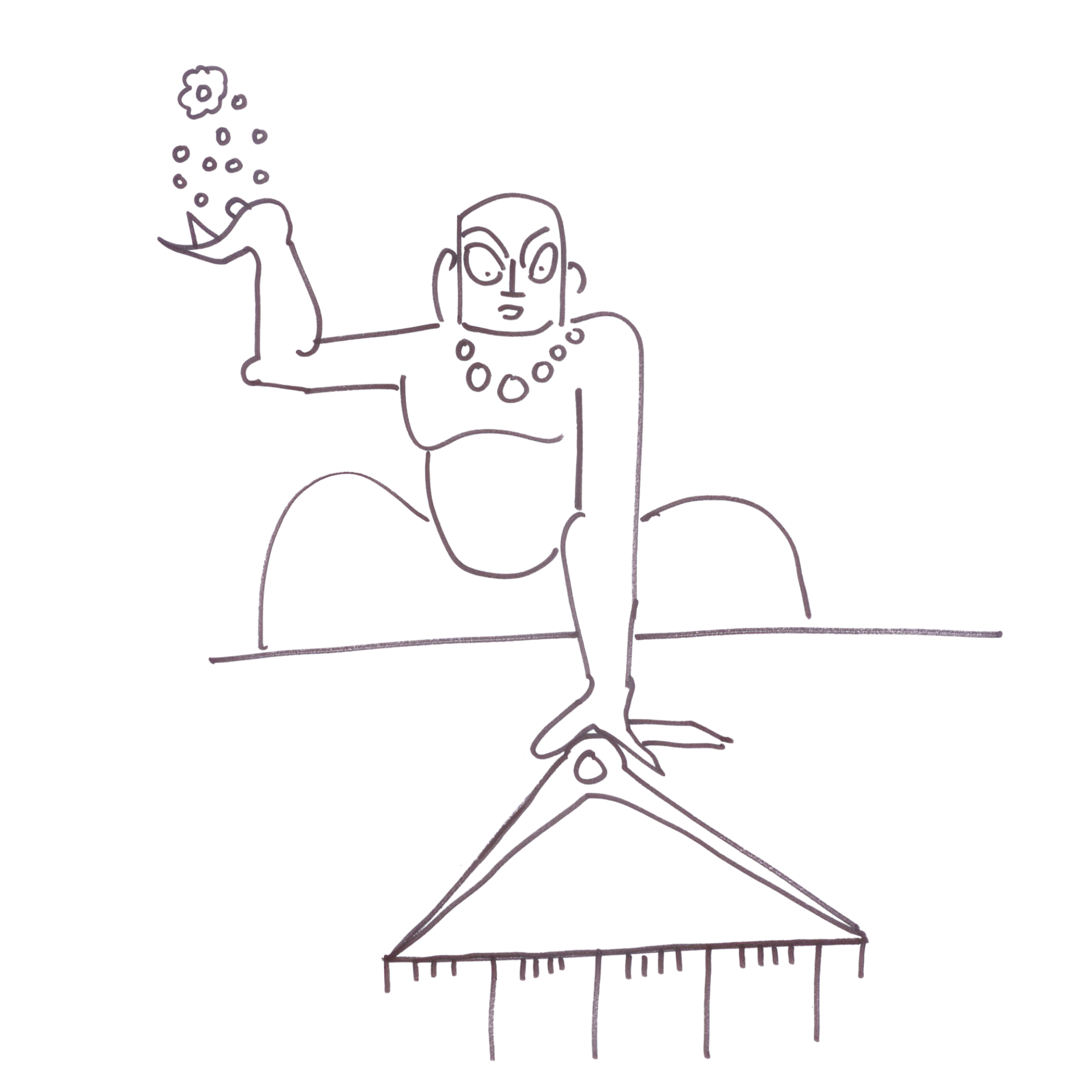
Yet, the old value placed on three does not completely disappear. There remains a memory of Tri-Vikrama, the god who takes three steps; the Tridevas—Shiva, Vishnu, and Brahma; the Tridevi—Lakshmi, Saraswati, and Durga; and symbols like Shiva’s trishul and his three eyes. The male god was shown with a pair of two smaller consorts on either side. The goddess was shown with her two brothers or her two sons on either side. The symmetry created the triangle.
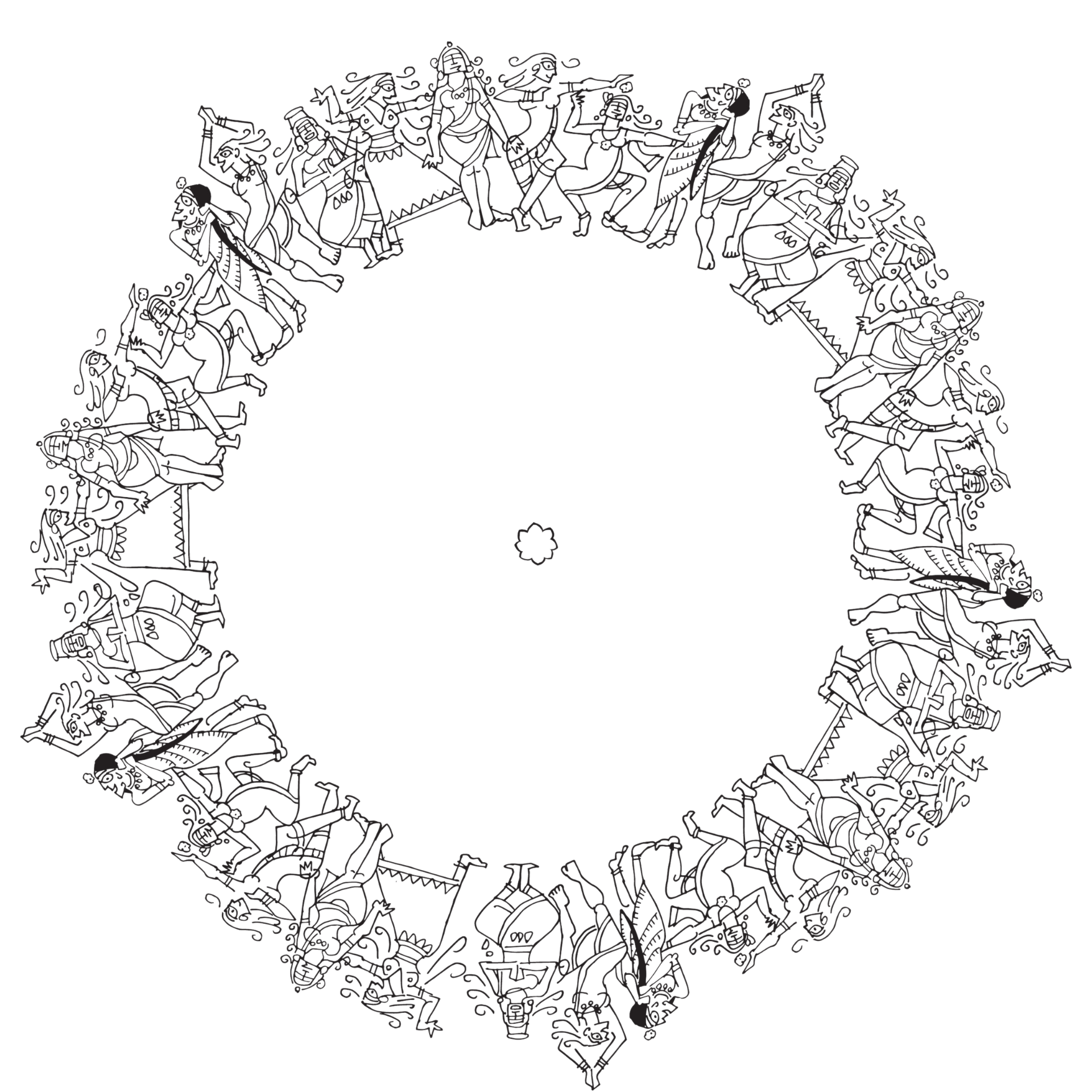
Two three-sided triangles, one male and one female, could give rise to a four sided square of the Vastu-purusha if the bases matched. If the tips joined, one got Shiva’s rattle drum. If the triangles intersected, then one got the six pointed chakra of Vishnu. The four cardinal directions were ruled by four deities. Along with four ordinal directions, the Tantrik eight-petalled lotus emerged. Thus, Tantra, captured the old and later Vedic memories through art.