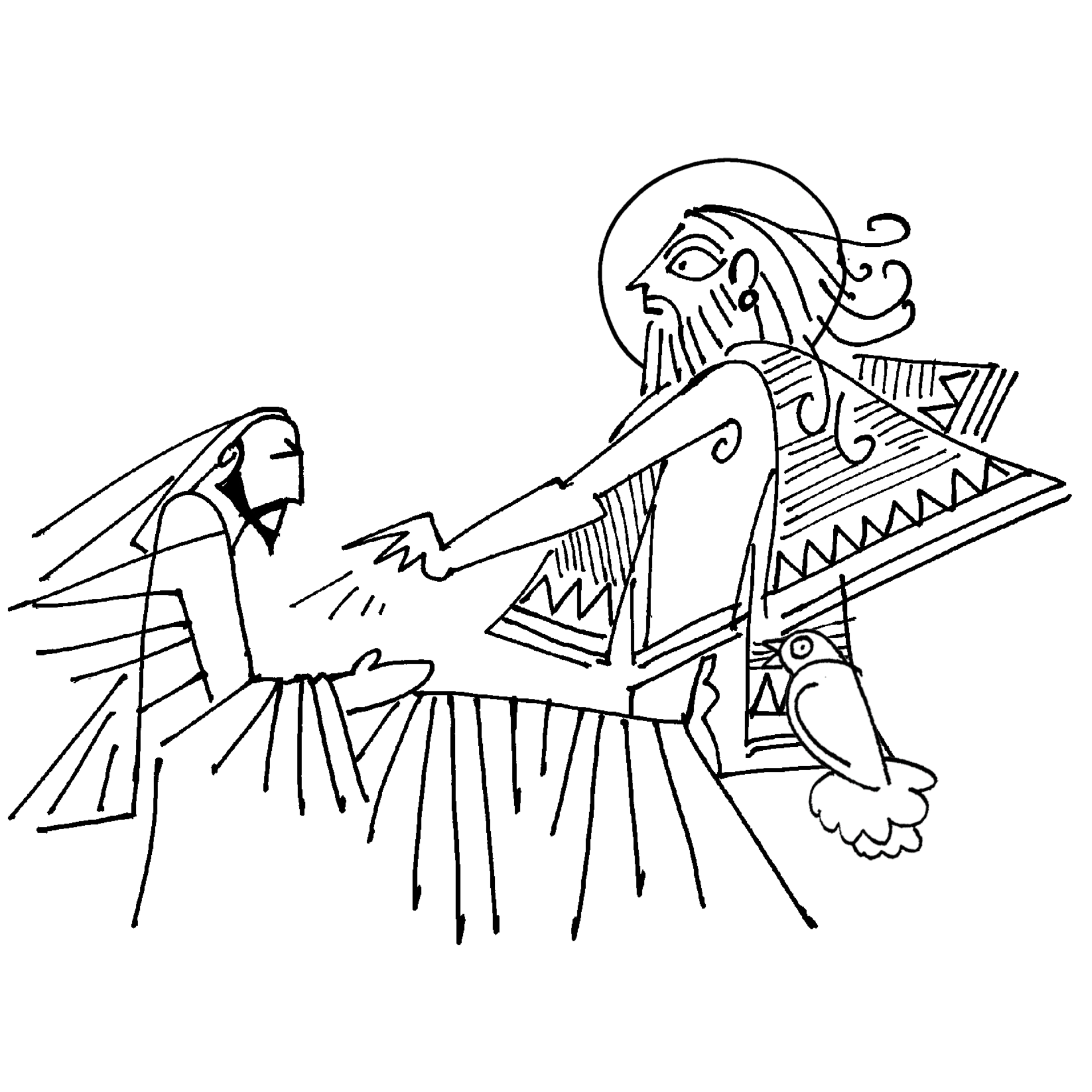
God creates the world. God knows best. That is the foundation of Christian mythology. But humans do not trust God’s mysterious ways. And this gives rise to a competitive spirit, to jealousy. Jealousy moves quietly through the Bible, slipping into homes, upsetting marriages, splitting kingdoms, and turning love into rivalry. Each tale becomes a mirror for our own anxieties about attention, approval, and belonging.
The first tale is stark and primal. Cain and Abel stand at the dawn of agriculture, making offerings to God. When Abel’s offering is favoured, Cain feels invisible before the divine gaze. That sting becomes rage. In the world’s first recorded act of violence, a brother kills a brother. Jealousy here is not just an emotion; it is a force that breaks the very idea of kinship. The sacred bond of blood is undone because one man wanted the approval another received.
The story of Sarah and Hagar is more intimate. Sarah, unable to conceive, offers her maid Hagar to Abraham. But when Hagar becomes pregnant, Sarah feels bitterness rising within her. She resents the very solution she orchestrated. The household becomes a battlefield of glances and grievances. Jealousy here is born not of malice but of longing. Yet longing denied can be as destructive as anger. The result is exile, tears, and generations of estrangement.
Joseph and his brothers turn jealousy into deceit. As Jacob’s favoured child, Joseph enjoys a love that his siblings crave. His dreams of glory feel like taunts to those who labour unnoticed. Their envy pushes them from irritation to conspiracy, from conspiracy to cruelty. Selling their brother into slavery is not just a crime; it is an attempt to erase the symbol of their insecurity. Yet this story also reminds us that jealousy often masks our fear of inadequacy.
King Saul’s jealousy of David is the story of power under threat. David’s victories and popularity make Saul feel his crown slipping. Instead of seeing David as an asset, Saul sees him as a rival. Jealousy distorts his judgment until he becomes consumed by suspicion. A king who should protect his people becomes obsessed with destroying one man. Power mixed with insecurity is volatile. Saul’s downfall begins not on the battlefield, but in his heart.
Rachel and Leah reveal the quiet pain jealousy breeds inside marriage. One has beauty, the other fertility. Each wants what the other possesses. Their rivalry turns motherhood into competition and affection into currency. The home becomes a marketplace of envy, where love is negotiated through sons and symbols. Domestic spaces, the places meant to heal us, often amplify our deepest comparisons.
Korah’s rebellion against Moses shows jealousy in its political form. Korah is not motivated by justice but by the desire for authority. He frames ambition as fairness, envy as spiritual equality. But scripture is clear: when leadership is coveted rather than earned, community fractures. Jealousy here becomes ideological. It wraps itself in high principles while hiding low motives.
These six stories remind us that jealousy is not a small flaw. It is a shift of the inner compass. It makes us look outward rather than inward, resent rather than reflect. In each tale, jealousy creates a rupture that takes generations to mend. The Bible does not moralise; it simply shows the cost. It’s a cost we still pay, not just in Christian lands, but in Hindu lands too.