Hindu mythology states that horses were churned out of the ocean of milk by gods and demons. This myth is not found in Vedas, which has the earliest songs celebrating horses in the world. These are dated to 1500 BC. Around this time, horse-drawn chariots appear for the first time in the artwork of ancient Egypt.
The light-spoked wheel horse-drawn chariot was invented in the Eurasian steppe around 2000 BC. It spread to the dominant civilisations of the south from Egypt in the West to China in the East, in the subsequent centuries. Before this period, during the early Bronze Age, there were no horses or chariots. Harappan cities were unfamiliar with this animal, as were the builders of the pyramids.
In Vedic literature, for the first time, we hear of gods whose chariots are pulled not just by bullocks but also by horses. In the Brahmana literature, there are accounts of horse-drawn chariots running over people and killing children, accompanied by rituals to purify those involved in such accidents. In Jain texts, Horse is the symbol of Jain Tirthankar Sambhavnath.
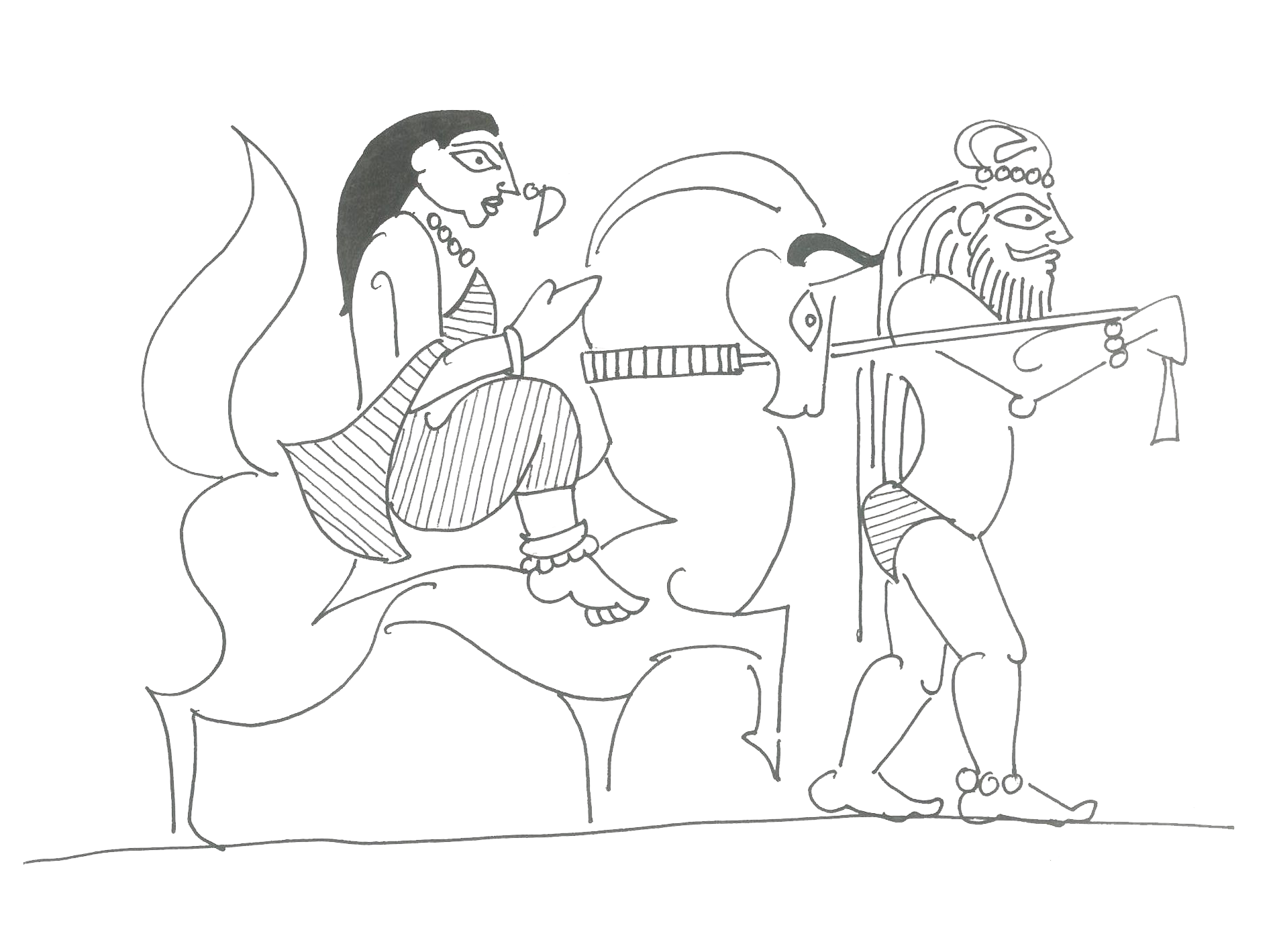
In the Ramayana, horse-drawn chariots appear when Ram is leaving the city of Ayodhya along with Lakshman and Sita. In the Mahabharata, sage Richika approaches King Gadhi to marry his daughter Satyavati and is asked to provide horses in exchange. There are also stories of Vamadeva fighting kings who take his horses and refuse to return them. These tales recall a time when the import of horses was highly prized in India, with those who brought horses often marrying local women. These memories of transactions involving horses are preserved in Vedic stories.
Kaikeyi’s father is called Ashwapati, meaning “master of horses.” The kingdom of Kaikeya is located in present-day Pakistan. Similarly, the land of Madra, from which Madri (wife of Pandu in the Mahabharata) hails, was located in present-day Pakistan, and was famous for horses. It is not a coincidence that all kingdoms associated with horses are located in the north western part of India.
It is well known that since Mauryan times, elephants were exported from India and horses were imported into India from Central Asia, Persia, and Arabia. India’s wet monsoon climate made it difficult for horses to thrive and for healthy breeds to be raised. They suffered from infections and malnourishment. Only about a thousand years ago, following Mongol invasions, did the Rajasthan-Gujarat and Tibet regions begin breeding horses adapted to Indian conditions.
After 500 BC, horse riding became popular and horse-drawn chariots became ceremonial. Buddha rides through the city on a horse drawn chariot but leaves riding a horse. Vishnu’s last avatar, Kalki, is shown riding a horse. The earliest images of riding stirrups in the world come from Stupa art of Sanchi in Madhya Pradesh dated to 2200 years ago.
Horses were so prized in India, that offerings of clay horses were common in many village shrines. Terracotta horses have been found as votive offerings to Dharma Thakur of Bengal, Ayyanar of Tamil Nadu and Mallana of Decca region. In Rajasthan, with Saka and Pahlava rulers came the concept of horse-riding gods like Ramdev-pir and Veer Tejaji. In Haryana, there is Guga-pir. Brahmins of South India, speak of Vishnu rescuing the Vedas in the form of horse-headed Hayagriva.
Considering how important horses are to Indian myths and legends and art, it is tough to believe that horses are not of Indian origin and have always had to be imported from west of the Hindu Kush.