In Rigveda, which was compiled and organised in its final form around 1000 BCE, the word Bharata refers to a group of people of the Kuru clan, who controlled the land we now refer to as Punjab and Haryana, extending from Indus river basin through Yamuna to the western banks of the Ganga. This makes the Bharatas the earliest kings of India, who played a key role in the establishment of Vedic culture in the Gangetic plains.
A thousand years later, around 100 BCE, in a royal inscription found in Odisha, a Jain king called Kharavela refers to Gangetic regions as Bharatvarsha.
Around the same time, the story of Bharata kings was compiled by Brahmins as the Sanskrit epic first known as Jaya and then as the Mahabharata. This epic elaborates stories of kings mentioned in the Rig Veda such as Yayati, Shantanu, Puru, Kuru and Bharata. Thus, it seems to create the impression that it is a carry-forward of Vedic ideas, which it is not.
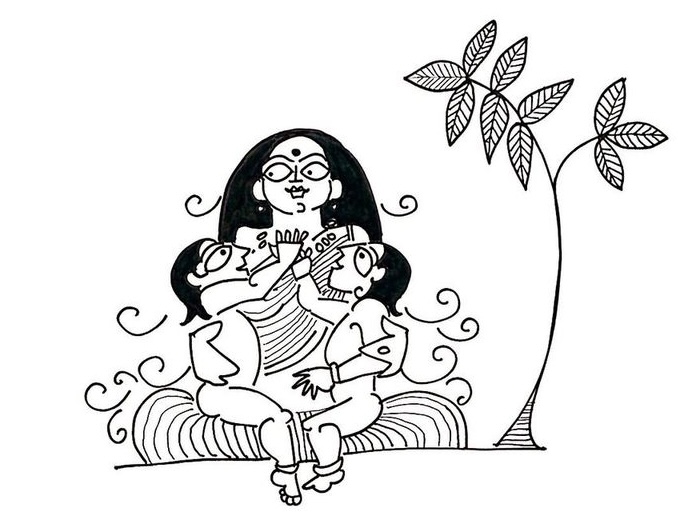
In this new epic, Bharata is the son of Shakuntala and Vishwamitra. Shakuntala’s mother is a celestial nymph, while her father is a descendent of the solar dynasty. Dushyanta is from the lunar dynasty.
Hence, Bharata is a confluence of two great lines of kings – the solar and the lunar. This epic describes, for the first time, how the world was in trouble, and introduces the idea of how Vishnu descends to restore dharma on earth. The ‘world’ at this time was Arya-desha and was limited to North India.
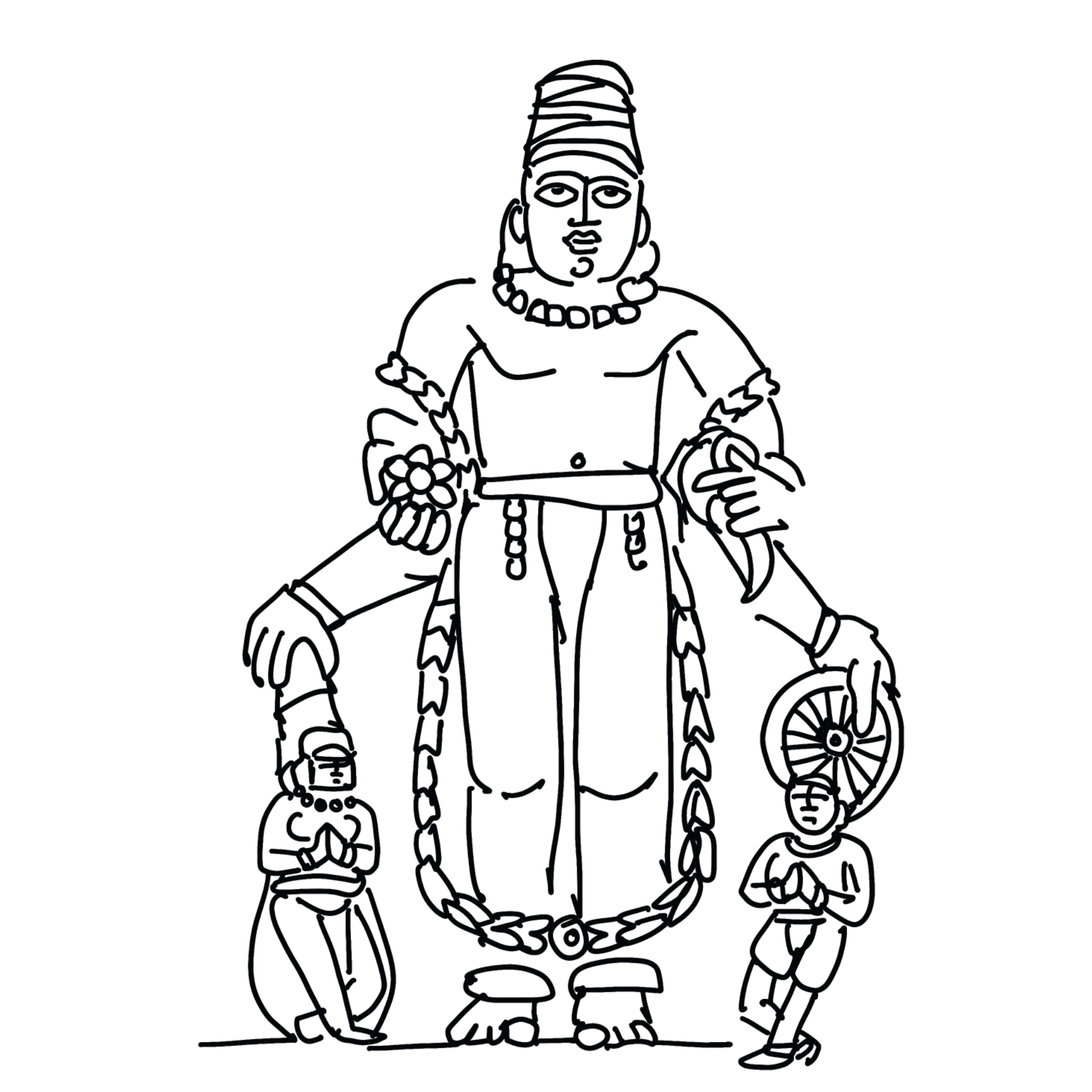
By around 500 CE, in the Vishnu Purana, we learn of another Bharata, son of Rishabha, who becomes king after his father becomes an ascetic. Rishabha is the first Jain Tirthankara and his presence in Vishnu Purana indicates an attempt to appropriate him into the Puranic fold. Jainism was a monastic order that emerged in the lower Gangetic plains, east of the Gandaki, just like Buddhism. In Jain scriptures, Vedic fire altars are created by men who misunderstand the funeral pyres of Rishabha. Jain ideas were transmitted orally for a long time. Much was lost. Some ideas were put down in writing around the time of Vishnu Purana, so around 1500 years ago. As per Jain texts, Bharata was the first Chakravarti of India, son of Rishabha, who defeated his ninety-nine brothers, but was humbled when he realised, while carving his name atop Mount Meru, that he was not the first to conquer the earth.
So, who is the Bharat after whom India is named Bharat-varsha? Is he a Vedic king, or an Epic king, or a Jain king? But no king ever ruled all of India. Maps in history textbooks give a false sense of control.
Inspired by Persian kings, Ashoka controlled a vast network of trade routes, up to river Tungabhadra, not all the lands, 2,300 years ago. Akbar controlled only North India. The British Empire constituted half of India, the other half being controlled by hundreds of Princely States.
The idea of Bharat as a single unit, from Himalayas to the Seas, is cultural rather than political, first mentioned in Manusmriti which is about 1800 years old. This cultural unity was provided by the spread of Brahmins who served kings as courtiers and statecraft consultants and popularised the idea of caste (chatur-varna dharma) and Sanskrit as the court language and Ramayana and Mahabharata as the book of kings. The idea of Hindu Rashtra confuses the political with the cultural.