About a thousand years ago, when Rajasekhar wrote his discourse on poetry, the Kavya Mimansa, Aryavarta stretched from the Himalayas down to the Vindhya mountains, bounded on the east and west by the seas of Bengal and Gujarat. He knew little of the southern regions and spoke of them scarcely at all. For him, the Antar-Vedi, the core of Aryavarta, lay between the Ganga and Yamuna, with its meridian passing through Kanyakubja (modern Kanpur). Varanasi marked the east, Dwaraka the west, Mahishmati on the Narmada the south, and to the north lay the lands beyond Prithudaka, the flatlands of Haryana.
Prithudaka takes its name from Prithu, an ancient king mentioned even in the Vedas. His story is elaborated only later, in the Puranas, where he is credited with clearing the earth of forests, flattening the land, and introducing agriculture.
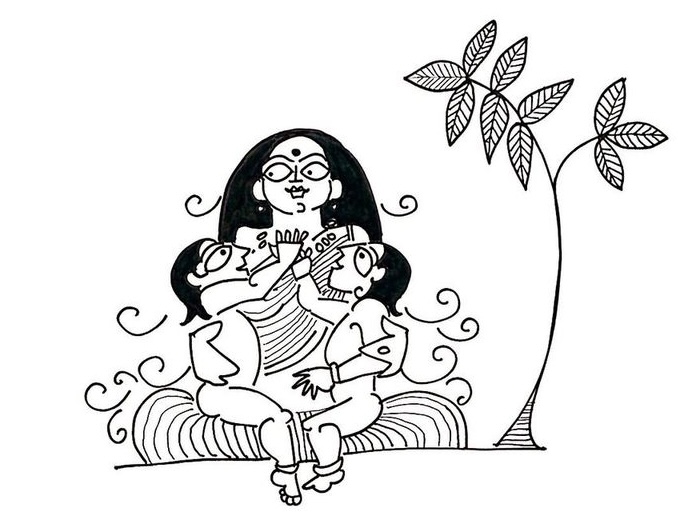
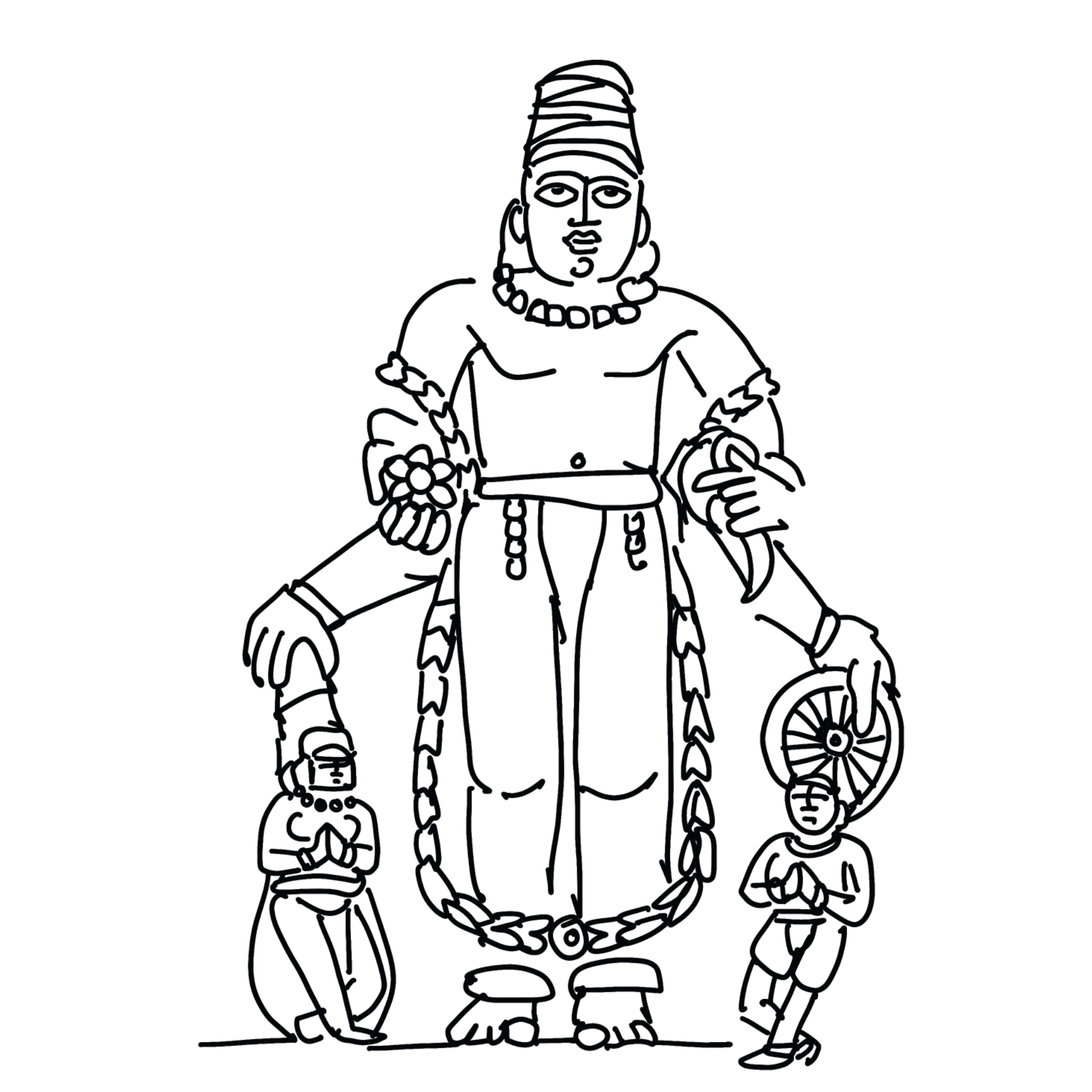
The tale begins with King Vena, who plundered the earth so violently that the earth goddess wept and called upon the gods. The Rishis, equally enraged, fashioned a missile from mantras and Durva grass and killed him. They then churned his corpse, and from it emerged two beings. The first was Nishada, a tribal man who went to live in the forest. The second was Prithu, the ideal king, to whom the gods gave a bow, a symbol of balance, useful only when neither too tight nor too loose.
Prithu commanded the earth to feed humanity. She fled in the form of a cow. He pursued her with his bow drawn, until she turned and said: if you kill me, all life ends. Better to milk me instead. This milking of the earth-cow became the metaphor for agriculture. The king became Go-pala, the keeper of the cow. The earth became Go-mata. Crops were her milk, drawn without her destruction. It is a metaphor, now taken literally by those who wish to deliberately misread its message.
The story of Prithu is an environmental story, and it is being systematically ignored by religious leaders. They speak of Dharma and Raj Dharma but forget the ecological role governance must play. In the name of building a great Bharat, definitions of Bharat are shifting, and so are definitions of Dharma. Dharma is being equated with development, with the destruction of forests and rivers. The literal cow is honoured with melodramatic sentimentality while the earth-cow is plundered for minerals and timber, her air and water poisoned. She is crying, and there is no Prithu with a balanced bow to save her.
Nishada, too, has been forgotten. He was born from the same source as Prithu but chose the forest over the field. He was the vanavasi, the forest-dweller, though the current vocabulary studiously avoids calling him adivasi, the original inhabitant. The Vedic imagination offered two ways to live with the earth without destroying her: Nishada working with the forest, Prithu cultivating the field. But cultivation required respect. The king had to be a cowherd. The harvest was milk, not loot.
Then there is Kalidasa, writing about 1700 years ago. In his Raghuvamsa he tells of King Dilip, father of Raghu, who serves the divine cow Nandini in penance. A lion attacks her, and Dilip offers his own body in her place. He is praised for this self-sacrifice. What Kalidasa leaves carefully unsaid is that the lion would not have come for the cow had the forest still been standing. Deprived of deer, of cover, of its own world, the predator was pushed out to hunt domesticated animals at the edge of human settlement. The king’s heroism rests on an ecological crime he himself committed.
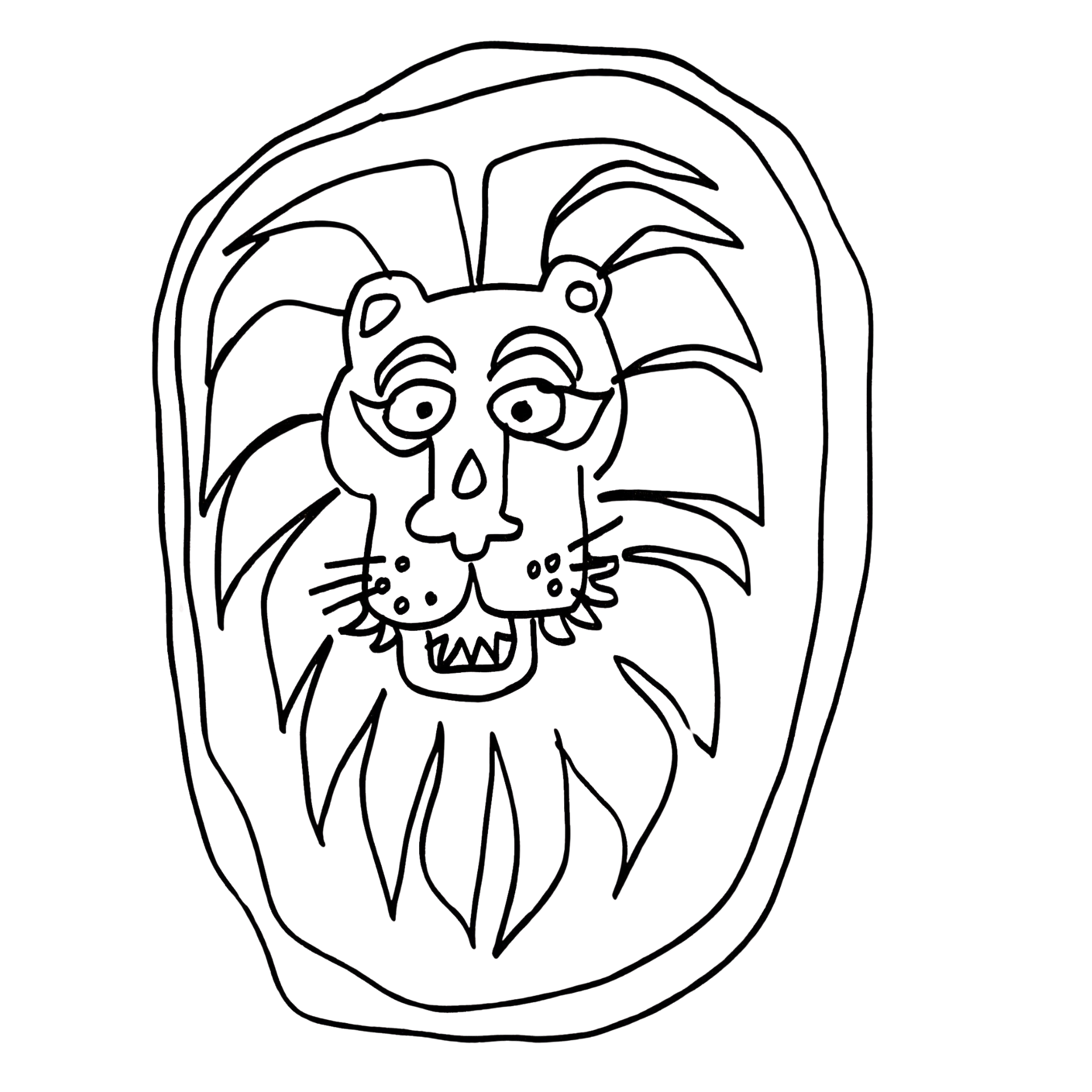
Who is the lion that Dilip is protecting his cow from? Kalidasa was writing perhaps five centuries after Ashoka, whose lions still sat atop pillars across the subcontinent as the most recognisable emblem of imperial power. Ashoka’s lion was the Mauryan state itself, broadcasting Dharma from Kandahar to Kalinga. For a Sanskrit court poet of the Gupta age, writing in a tradition that had absorbed and moved past the Buddhist imperial moment, to stage a lion as the menace that the truly dharmic king must confront, even die for, reads as something more than a stock predator. Kalidasa may well have been mocking the Mauryan lion, suggesting that the imperial beast which claimed to embody Dharma was in fact the very thing devouring the cow it was meant to protect. Empire, expansion, the clearing of forests to plant the flag, this is what produces hungry lions at the village edge.
In a world where non-violence is reduced to vegetarian food, we need reminding of the violence of development. The expansion of Aryavarta was never meant to be about producing more cows by erasing forests and the creatures that live in them. We can valorise the lion, carve it onto our currency and our state seal, but a lion without a forest will eventually come for the cow. And no king, however willing to die theatrically in her place, can pretend he did not summon it himself.