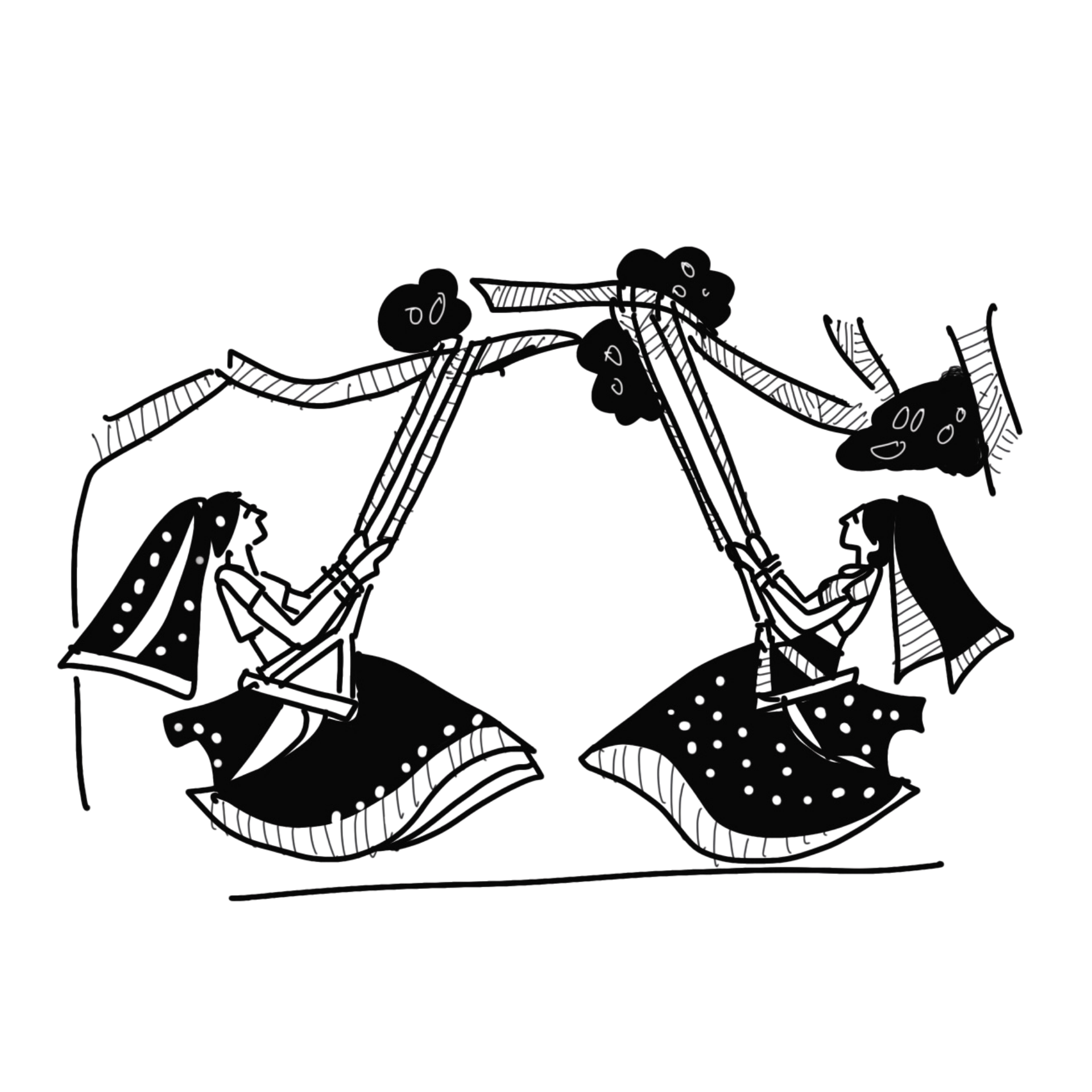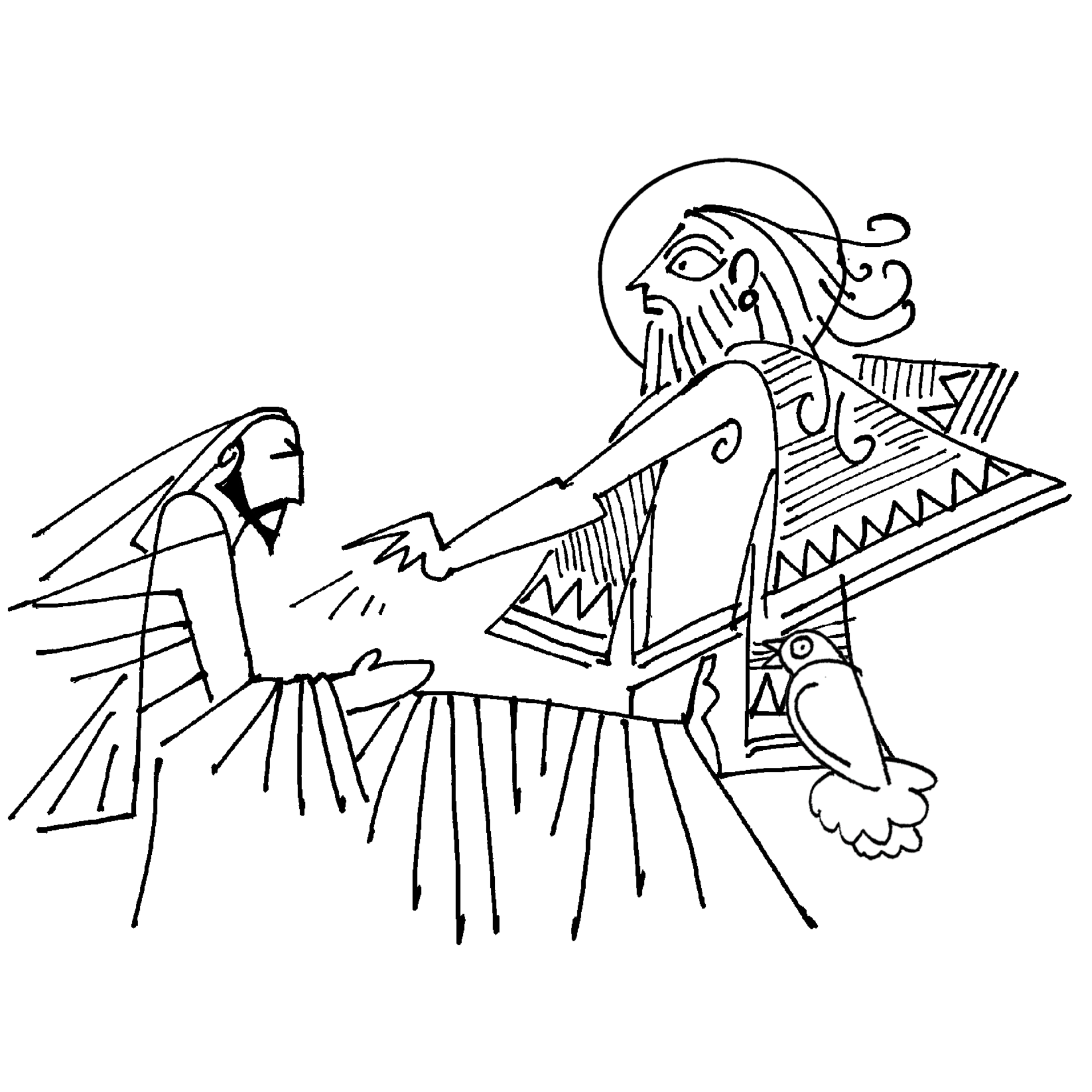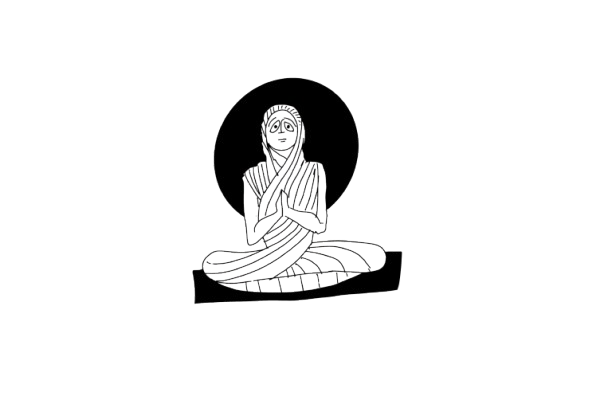
A new-age guru has been establishing a monastic order for women, encouraging them to wear simple clothes, shave their heads, and break all ties with their families, as they seek union with the divine through the guru. This practice has ancient roots, as men and women who wished to renounce the world were often encouraged to shave their heads or even pluck out their hair, as in Jainism, where hair was seen as something erotic; this was a way of desexualising them.
However, the shaven head of a woman has different meanings in the Hindu context. In many elite families, a widow’s head was shaved to signal to the world that she was not available to any man. This was the opposite of the bindi and the sindoor worn in the parting of the hair to celebrate the fertility of the married woman. This was the vidhava (husband dead) and sadhava (husband alive) divide. The courtesan and the devadasi was always sadhava as her husband was god, who was immortal. The nun and the courtesan both approached the divine differently. The latter approach did not appeal to puritanical Indian men who erased her history from Indian textbooks. The former is being resurrected by New Age babas with gumption.
The idea of hair as erotic is seen around the world. A woman combing her hair is seen as a woman of leisure. In ancient Babylon, wealthy women had long hair, while slaves were forced to cut their hair and shave their heads. In Europe, after World War II, French women who were believed to have had sexual relations with Nazi soldiers were publicly punished by having their heads shaved. In Judaism, Christianity, and Islam, showing hair in public was considered vulgar, and women were forced to cover it with a veil—a practice that continues even today. Orthodox Jewish women, for example, wear wigs to hide their real hair. Giving up hair is a form of renouncing the material world, and hair is often offered to God in South Indian temples as an expression of devotion. In Hindu mythology, the goddess is often depicted with thick, wild, untied hair, while the domesticated goddess, a symbol of culture, is shown with her hair oiled, combed, parted in the centre, tied in a bun or a plait and decorated with flowers and jewellery. In both the Ramayana and the Mahabharata, when a woman’s hair—the heroine’s hair—is untied, it threatens war and the end of civilisation. Thus, hair has a significant meaning in Indian culture. There is no Hindu goddess with shaven head.
As per Buddhist lore, Buddha had removed all his hair when he renounced the world. However, when his images were carved nearly five centuries later, the artisans refused to portray him with a shaven head, for that was seen as bringing bad luck. So he was shown with a topknot. But it was referred to as “ushinisha” or the cranial bump, indicating his Buddhahood. Even Jain Tirthankaras are shown with hair on their head.
Shankaracharya, the Hindu revivalist, covers his shaven head as orthodox Vedic Brahmin saw the shaven head as inauspicious.
In the 21st century, many young women shave their heads for cosmetic reasons and as a demonstration of their rejection of patriarchy and heteronormativity. It is interesting how male gurus still have the power to get women to voluntarily shed their sexuality. The power of male gurus over their female followers remains remarkable in the 21st century.