Published in Corporate Dossier, ET on June 17, 2011.
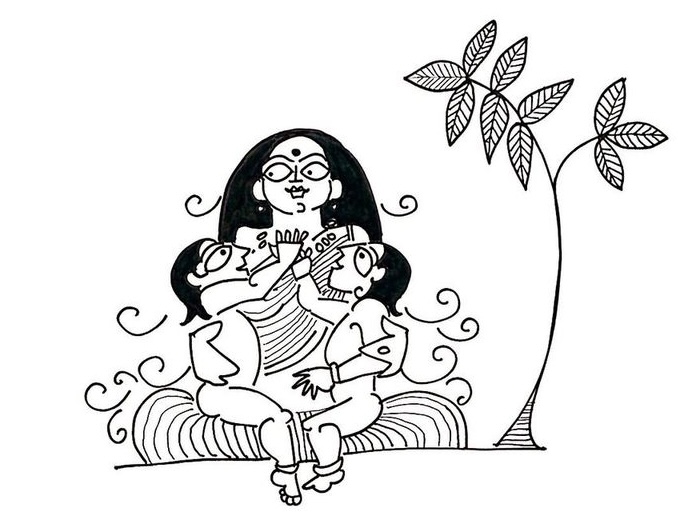
As she was being chased by the tiger, a deer ran up mount Kailas, the abode of Shiva, and sought refuge, “Save me from the evil tiger that hunts me every day.” Shiva took pity on the deer and gave her shelter in the palm of his hand. The tiger who was pursuing the deer saw this and shouted, “Excuse me, what will I eat now? Why do you feel sorry for the deer and not me? Is it because I have sharp teeth and claws? What about my hunger and the hunger of my children? Don’t we merit consideration? If I don’t hunt the deer, what will I eat? Would you rather that tigers starve and die?” Shiva’s consort, the goddess Parvati, who is Annapoorna, the provider of food, therefore decided to give the tiger shelter.
Hearing about this, a rat that was being pursued by a serpent entered Kailas and also sought shelter. So did the serpent chasing the rat, for if the rat is given protection who will feed the serpent? Ganesha, the son of Shiva and Parvati, gave shelter to both, the rat and the serpent. The peacock who was chasing the serpent, now wondered who will take care of his needs ? Kartikeya, the other son of Shiva and Parvati, took the peacock under his care.
And so it is, atop Mount Kailas, the divine family of Shiva and Parvati and Ganesha and Kartikeya provide shelter to predators and prey. They see the point of view of the predator and they see the point of view of the prey. They see the fear of the predator that haunts the deer and the rat and the serpent. They see the fear of scarcity and hunger that haunts the tiger and the serpent and the peacock. There are no villains. There are no victims. There are only creatures trying to survive. And atop Kailas, everyone finds a place.
This visualization draws attention to the laws of the jungle. Nature does not favor any animal: everyone has strengths and weaknesses, and the one who runs fast survives. But humans judge: we take stands, divide nature into predator and prey, choose to protect one over the other, deeming one more worthy of need than the other. We seek to improve on nature, and so go about creating culture, a place where the weak get protection, where the strong are restrained by rules. We create a worldview where there are villains and there are victims, and take decisions accordingly.
The union had called for a strike at a key Industrial unit. The owner, Shyam, was furious. “They have become highly politicized. They don’t want to work. They just want to create trouble, black mail us with more demands. We have met every condition we could,” he told his father, Anirudh, who had long since retired. Shyam’s grandfather Govind, had established the factory in British times. And he had been struggling to keep it afloat since the laws and regulations had changed since post-Liberalization. His products were no longer the monopoly in the market. There were local competitors and the threat of Chinese products loomed large. “Don’t they know how easy it is to shut the factory down!” he screamed.
Meanwhile the union leader was shouting, “They are forcing us to strike so that they can shut the factory and finally sell the factory land. They don’t care for us. They just want to exploit us and then throw us aside when there is nothing to exploit. Let us rise up and fight. Their children study abroad while our children cannot even afford to go to college.”
Anirudh tried to explain to Shyam that a confrontationist attitude helped no one. Everyone comes from need. While he was seeing the union leader and the striking workers as villains, and himself as a victim, they were seeing him as a villain and themselves as victims. “You both are behaving as if your survival depends on destroying or domesticating the other. For him, you are the tiger. For you, he is the tiger. When two tigers meet, they fight over territory by showing their teeth, taking care they don’t actually hurt each other with their claws. But when two humans, imagining the other to be a tiger, meet, there is bloodshed on either side, with each party feeling self-pity and self-righteousness. Be ware.”
But neither Shyam nor the striking workers believe that Kailasa is a possibility where both parties can be comforted. Both believe in the jungle where one party has to die. They genuinely believe in the Western construct, “It’s a dog eat dog world out there!”