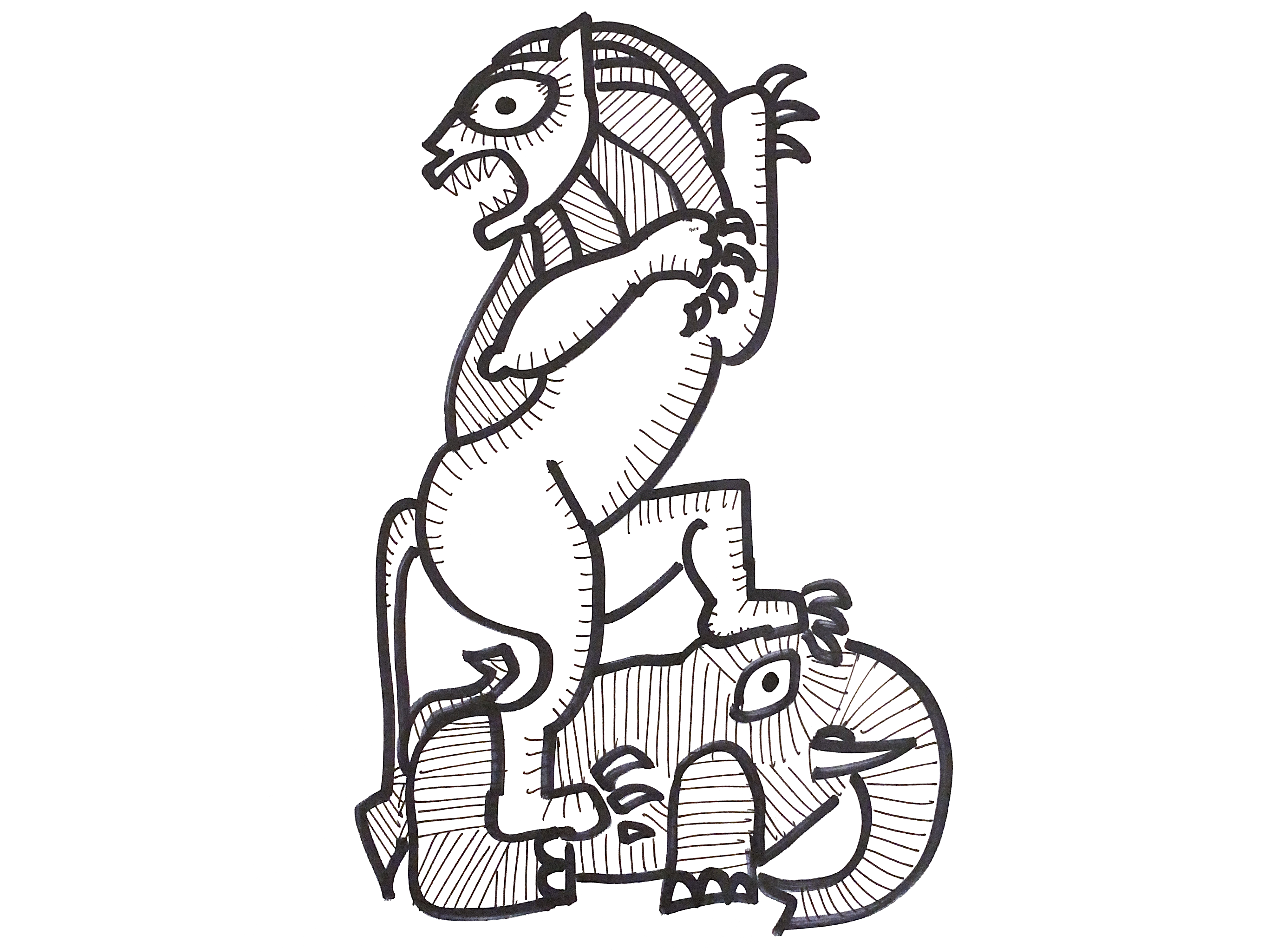
Lions have long been symbols of royalty across the world. In India, kings sat on lion thrones (simha-asana), and Durga, the patron goddess of royal households, is shown riding into battle on a lion. Uniquely, in our country, lions are also linked with ascetics and their guardian goddesses. Both kings and ascetic were called shardula, a mythical being that is part lion, part tiger and even part elephant.
The motif of the lady on the lion originated not in India, but in the Middle and Near East. Its emergence and popularity across Hinduism, Jainism and Buddhism reveals how ideas travel across geographies in history.
Take the case of Singapore, in the Malay peninsula. The city is named after the lion, even though the big cats never existed in Southeast Asia. Legend says that a local prince saw a lion there in the 13th century – an idea that could have come with Tamil sailors. The people of Sri Lanka call themselves Sinhala, or the lion people, even though there are no lions in the island country. The name is traced to their first king, Vijaya (descendent of lions), who migrated from India.
In fact, some historians wonder if lions are native to India. No Harappan seal shows the animal; they only depict tigers. The first mention of lions are found in Vedic texts and probably carry memories of Central Asian beasts. The lion capital of the Mauryans may have been inspired by Persian royal art that showed kings hunting the animals. And most lions in the Mughal period were likely imported by royalty, to hunt in sport.
The Asiatic lion, in all probability, lived west of the Hindukush, across the Persian plateau, and a few must have made their way to Gujarat and central India. Mesopotamian cities have a long history of images of heroes such as demigod Gilgamesh wrestling lions, and the goddesses of love and war Ishtar riding atop them. Asherah, the wife of Yahweh, an ancient Levantine deity, was linked to lions and trees around 1,000 BC. Her memory has since been erased by those who wrote the Hebrew Bible.
Kingship comes with a mane
It is in ancient Egypt, nearly 5,000 years ago, that we find the earliest association of kingship and the lion. The king wore the Nemes crown, which framed his head like a lion’s mane. He was protected by Sekhmet, the lion goddess, who was also Hathor, the cow goddess. Around 3,500 years ago, artworks show the Egyptian pharaoh riding horse-drawn chariots while hunting lions.
Similar depictions of Persian kings were seen on public monuments around 2,500 years ago. They were also shown seated on thrones designed to resemble lions. About 1,700 years ago, in the Udayagiri caves of Central India, we find the earliest images of Vishnu as the man-lion Narasimha. It is also seen in Kondamotu, Guntur, in coastal Andhra, around the same time. Both these regions were centres of Buddhism and the newly emerging Puranic Hinduism.
Jains also claimed the lion as the symbol of their last Tirthankara, Mahavira. The royal symbol was thus a symbol of ascetic power, too.
Goddesses tame the big cat
In Hinduism, Durga rides a lion and kills the buffalo demon. Her story is found in the Devi Bhagavatam, composed 1,500 years ago. In early images, however, from the Kushan period (100 AD), and even in the rock-cut Udayagiri caves (300 AD) in Madhya Pradesh, the goddess is shown killing the buffalo, but there are no lions.
The large cat appears later at rock cut sites Aihole, Karnataka (600 AD) and in Mamallapuram (700 AD). The imagery of a goddess who rode a lion was probably brought to India by the Kushans, a nomadic people from the north Central Asian steppes who controlled trade routes across the Hindu Kush.
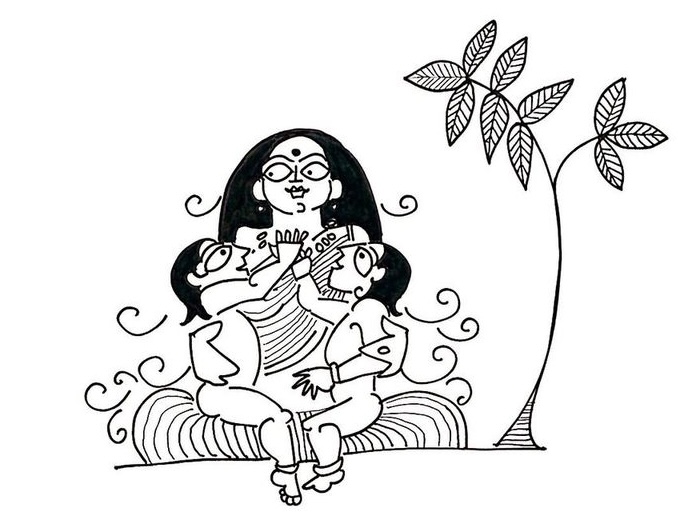
While the Hindu goddess on the beast embodies military power, the Jain goddess on the lion embodies resilience. Known as Ambika, she is a yakshi, guardian of Tirthankars, and her images appear with great frequency after 800 AD. The lion is no demon here, but her husband, who regretted abusing her when she served Jain monks before serving him. She holds no weapons, and she is depicted sitting under a mango tree with two children. She is thus linked more with fertility, like the lion-riding goddesses who were worshipped long ago in the Middle and Near East.