The richest families in India are strictly vegetarian and belong to the vaishya varna. They are supported by politicians committed to the cause of vegetarianism or Satvikism, a new form of Hinduism. As these rich communities take control of temples and pilgrimage sites, we find them pushing for Satvikism.
Yet, historically, the Veda had no problem with meat-eating. It is only after 200 AD, when the Manusmriti was composed, do we find dharmic arguments against meat. The 21st-century rise of Satvikism (obsession with imposing vegetarianism) reveals the stranglehold of the merchant class in India. In ancient times, they were patrons of Jainism and Buddhism, who invented fasting and vegetarianism as a spiritual practice. Now they fund many Hindu lobbies.
When we discuss Hindu society, the focus is on ‘pure’ Brahmins, ‘powerful’ Kshatriyas, and ‘impure’ Shudras. Rarely do we turn our attention to the ‘rich’ mercantile community, the third of the four-fold varna system. Their stories are found more in Buddhist Jataka and Jain lore than in Hindu Ramayana and Mahabharata. It reveals their outsider status.
Vedic culture was originally pastoral. Later, it became agricultural. The Brahmin priest was funded by cow- and land (kshetra)-owning communities. The emerging merchant class, feeling sidelined, favoured the monastic orders. The monks travelled with the merchants. The merchants funded Buddhist monasteries and Jain temples found along trade routes of Central India and the Western Ghats. It is here that the concept of the balance sheet extended beyond the material to the spiritual, inspiring the karma theory. One could earn good fortune by supporting the monastic order.
Harappan cities were built by merchants who traded with the Persian Gulf. The great Harappan settlement of Rakhigarhi is barely an hour from Agroha, a city linked to the Agrawal community. Legend says their king, Agrasen, established Agroha as a city of merchants, abandoning the military path and choosing the mercantile route. He encouraged support for young entrepreneurs by having each family contribute one brick and one gold coin. The brick built a house, and the coin served as seed capital.
Buddhism and Jainism emerged around 500 BC when the Gangetic Plain was trading with lands beyond the Hindu Kush, and ships were carrying cotton from India to Persia in the west and Southeast Asia in the east. The Rashtrakuta empire, which traded with Arabs in the 8th century, was a patron of Jainism. It was the merchant lobby that provided ships to Chola kings to clear trade routes in the Malacca Strait in 1000 AD. But this influence waned when Buddhists and Jains were violently pushed out by the rising tide of Hindu Bhakti movements after 1100 AD.
Many merchants were forced to adopt Hinduism to survive. In aligning with the Hindu faith, they assumed a place within the caste system below priests and kings. To safeguard their upper-caste status, they claimed descent from warriors. Those who revered Shiva said he inspired them to become merchants; those who followed Vishnu asserted Parashurama’s influence led them to trade. But these merchants favoured Brahmins who followed their Satvik dietary practices. In other words, the merchants forced the Brahmin dietary purification, not the other way around.
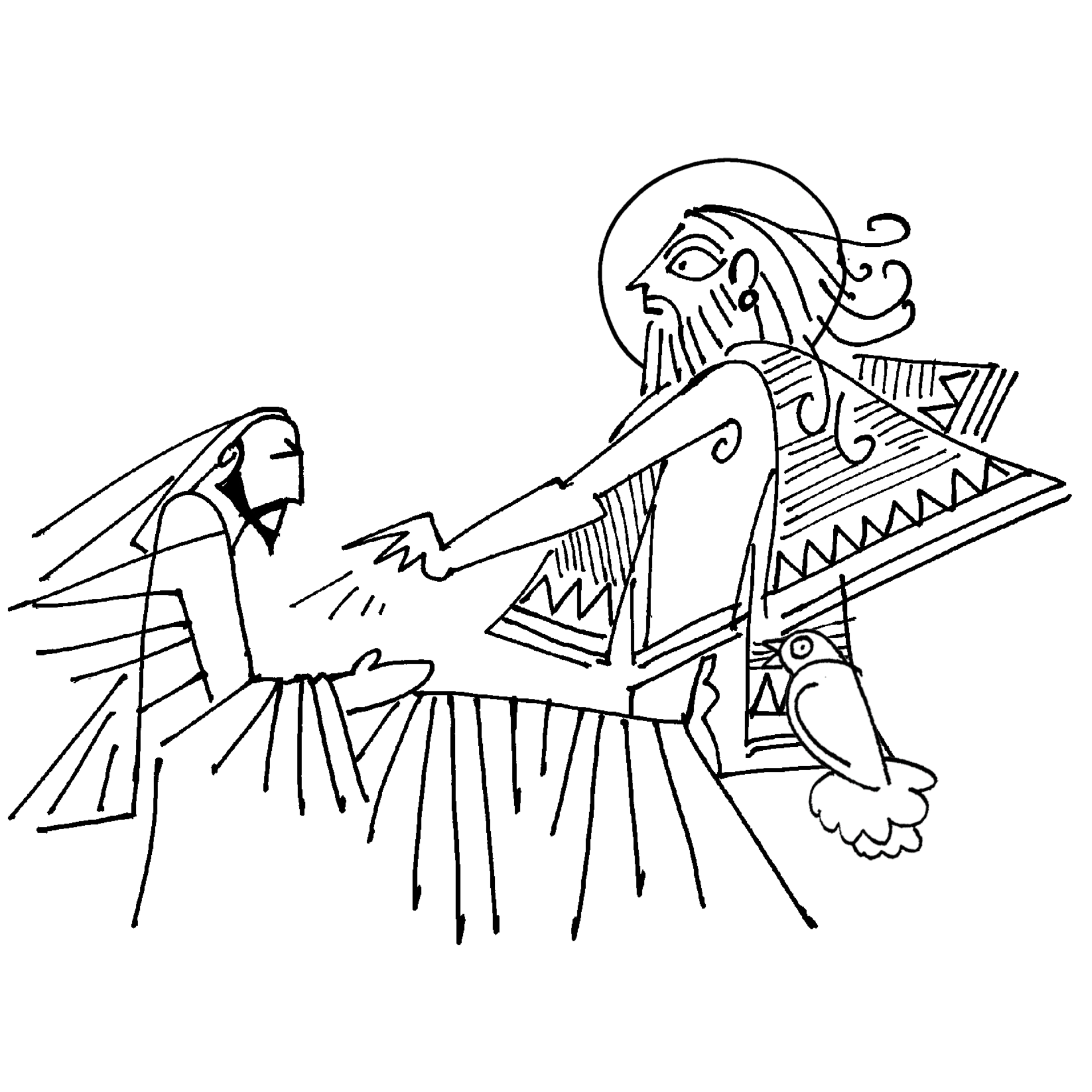
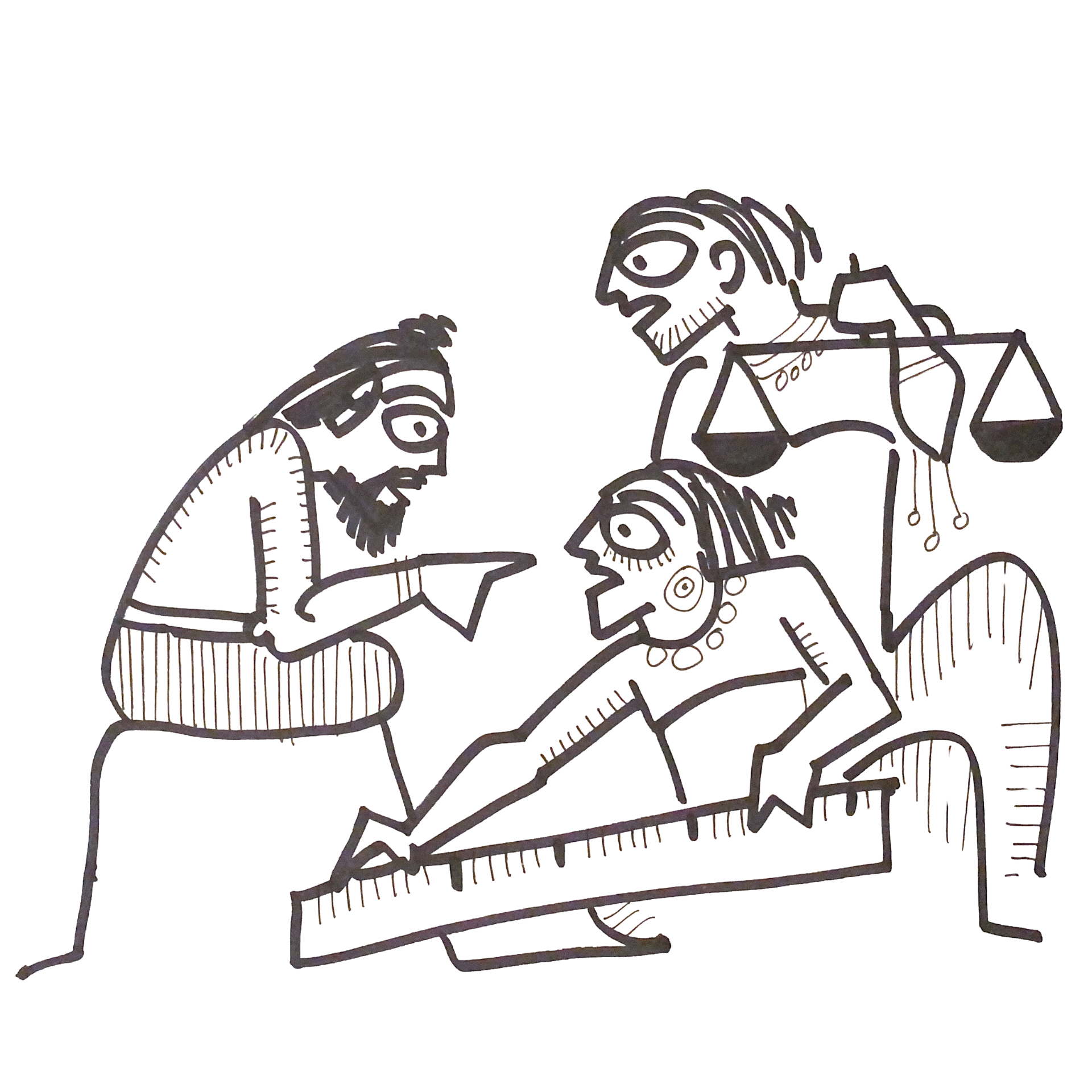
The powerful Maheshwari community of merchants traces its heritage to Shiva. They believe their ancestors insulted a sage and were cursed with disease and death, but Shiva rescued them on the condition that they would forsake their military ways. So the iron sword (talwar) was replaced by the iron pan balance (tarazu, tula).
The Khatri communities of north-west India tell a story of survival: when Parashurama was said to be annihilating Kshatriyas across North India, some Kshatriyas survived on the condition that they would abandon military pursuits. Another version suggests that pregnant Kshatriya women took refuge in Brahmin households, where Brahmins, to protect them, ate food cooked by these women. The children of these women became the merchant class, though they retained their warrior lineage by calling themselves Khatri.
The Khatri community played a significant role in the rise of Sikhism. The first ten Sikh gurus are said to be Khatris – merchants with a warrior ancestry. In the 19th century, when the British attempted to classify thousands of jatis in India according to the four-fold system outlined in the Dharma Shastras, they struggled to categorise the Khatris, who identified as Kshatriyas but practised as merchants.
Now, the merchants of India strategically control politicians in the country, mirroring what is happening in Capitalist America. The Satvik movement is a symptom of that, but China, always suspicious of merchants, has kept them in check. For China does not care for purity or profit; it has always privileged power.