As per conventional history, Jainism and Buddhism originated in India 2,500 years ago to challenge Vedic ritualism and casteism. Then, a thousand years ago, Buddhism was driven out by Brahmins, with a little help from invading Muslim warlords. Buddhism was largely forgotten in the land of its birth until it was rediscovered by European Orientalists, 200 years ago, and then reimagined 75 years ago by the Dalit Navayana movement. Jainism survived differently: by not proselytising, by not competing with Brahmins, and by institutionalising the practices of ritual and dietary purity.
However, there is another way to read this history: that Buddhism and Jainism continue to thrive today as they did 1,200 years ago, under the Buddhist Pala kings of Bengal and Jain Rashtrakutas of Karnataka. They do so under the guise of puritanical monastic vegetarian Hinduism that never existed in Vedic times.
The 3,000-year-old Vedism was based on rituals. It valued marriage and family. Brahmins ate all kinds of meat, contemporary manipulative mistranslation notwithstanding. Purity existed only in the ritual arena, not socially. There were no restrictions on inter-caste marriage, as indicated by genetic evidence.
Endogamy emerged only around 1,700 years ago, in the Gupta Age, roughly the time when Manusmriti was becoming popular, in an age of anxiety following the collapse of Roman trade and attacks by Hunas. Manusmriti valourises the householder (grihastha) and views marriage as an important right of passage to repay debt to ancestors (pitr-hrinn). However, it starts promoting a vegetarian diet, clearly a new idea for the times, and starts frowning upon inter-caste marriage. Words like dvija (twice-born) appear with greater frequency.
Adi Shankaracharya, who lived 1,200 years ago, promoted monasticism, and was accused by married Brahmins of being a crypto-Buddhist, as his ideas were curiously aligned with Buddhist thought, even if he did talk about the eternal soul, an idea that Buddha rejected. Monasticism was linked to Advaita, while householders preferred modified monism or dualism, which was part of temple traditions.
By the time of the Vijayanagar Empire, 700 years ago, Hindu monastic orders (matha) dominated the scene, controlling temples, documenting Vedic practices, as they faced an existential crisis following Islamic onslaught from the North. By this time, ideas of purity, vegetarianism, and restrictions on inter-caste marriage were actively promoted. Something had changed. And it could be the return of many Buddhists and Jains back to the Brahmin fold.
Faced with the Buddhist and Jain challenges, Vedic had split into two groups in the Age of Adi Shankaracharya: the intellectual school (Vedantins) and the ritual school (Mimamsaka). Vedantins like Adi Shankaracharya were drawn to the Pashupatas, who worshipped Shiva, who was equated with Adi Buddha (primal Buddha) of Vajrayana Buddhism also called Shunya-rupa, or formless one. The Mimamsakas merged with the Bhagavatas, first equating Vishnu with the yagna ritual and then with the worship of temple images. Like Jains, vegetarianism was equated less with non-violence and more with purity. Like Jains, images (archa-murti) were adored. Temples to Jain teachers were first built by Vedic gods, as per Jain mythology. Both established mathas like Buddhist viharas of yore, where hermits were in charge.
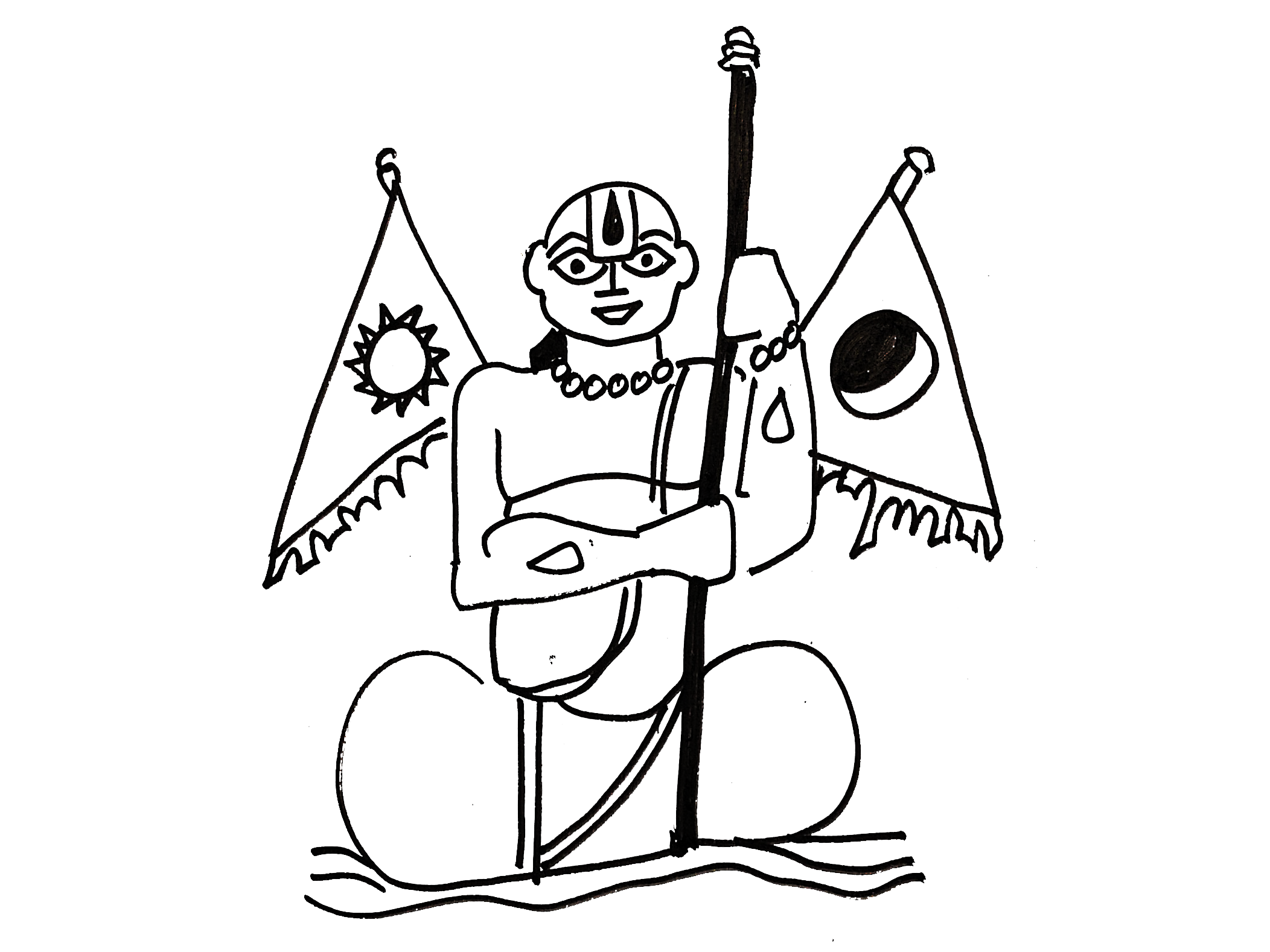
The legendary tension between Shiva and Vishnu sects mirrored the animosity between Buddhists and Jains found in Tamil epics like Nilakesi and Kundalakesi. The Shaiva monk still carries a single staff (ek-dandin) while the Vaishnava monk ties three staffs to make one (tridandin). Symbols are not signals; they never have a single meaning. So they can simultaneously indicate Buddhist, Jain, and Hindu monastic ideals. Brahmins had successfully cornered more royal patronage by equating kings with gods (deva-raja) and royal courts with temples. So to survive, many Buddhists and Jains returned to the Brahmin fold. But they did not give up Buddhist and Jain practices. They probably introduced a new avatar of Vishnu – a monk, seen in inscriptions and artworks from 800 AD onwards. In the 1,000-year-old Bhagavata Purana, we see clear attempts to include Rishabha-dev Tirthankara and Saugata Buddha as an avatar of Vishnu. This is seen as Brahmin appropriation by Marxist scholars. But it could be seen as Buddhist and Jain innovation.
As a celibate hermit teacher, Vishnu convinces the asuras to give up their Vedic ways (sacrificing animals in rituals). As soon as the asura become vegetarian, their city is destroyed by Shiva, much to Brahmaʼs delight. Tribal offerings became Tamasic, Vedic ritual offerings became Rajasic, and the Buddhist/Jain monastic diet became Satvik. This can be viewed as a conspiracy theory. But is it?