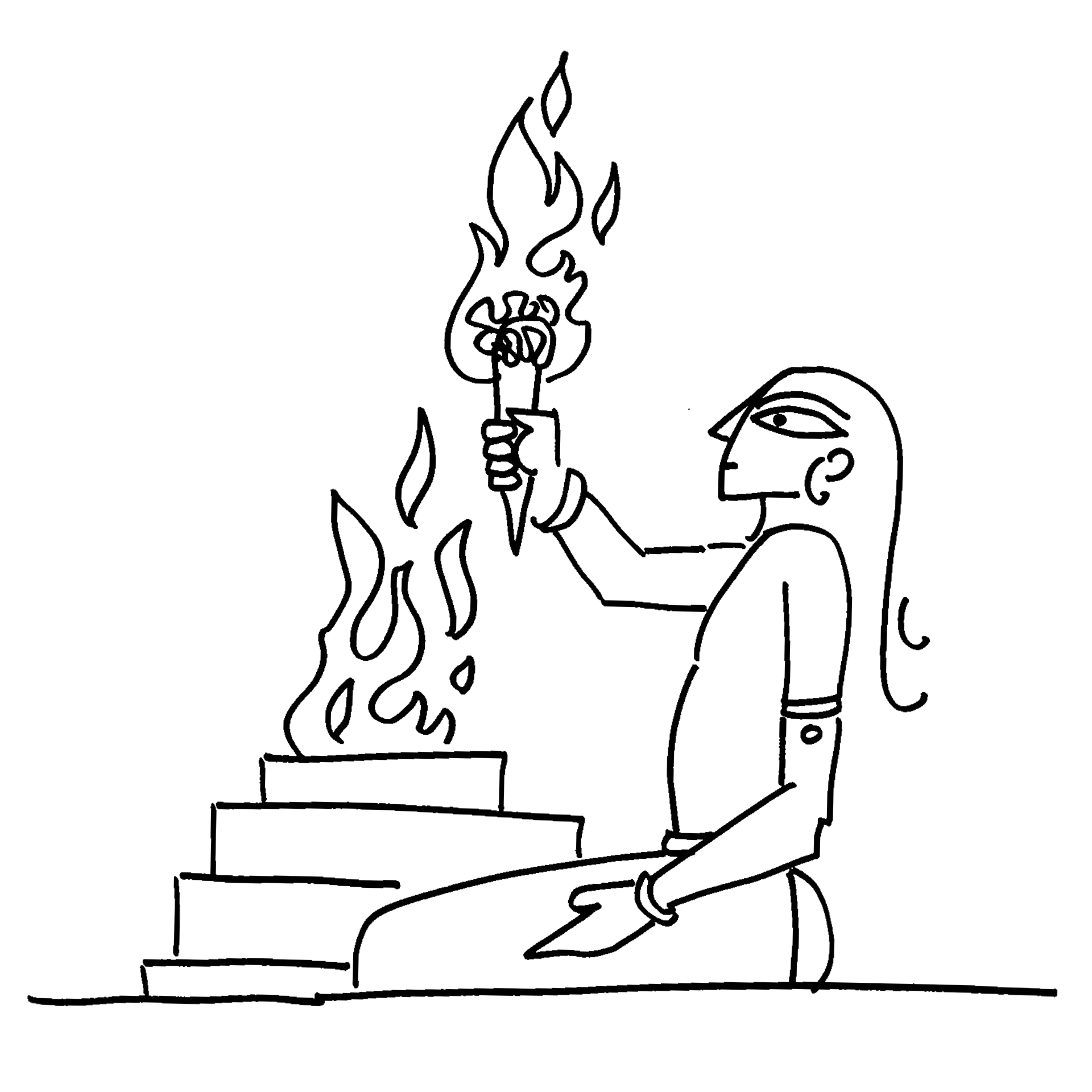
In Odisha, if you seek vegetarian food, you ask for ‘saadhaa’ food, or plain food. This harks back to a time when Buddhism and Jainism were major religions in Odisha, and one demonstrated monastic leanings by shunning rich, spicy, non-vegetarian or rajasic food, and choosing sattvic food, which was generally plant-based, though ghee, milk, and curds were allowed. The use of alcohol and intoxicants was considered tamasic but remained popular, both as part of leisure and ritual traditions, especially in tantric practices and many village rituals. But with the rise of Vaishnavism, vegetarian food was declared as temple food by Brahmins, that separates the pure from the impure. Saadhaa thus became Shuddha.
Organisations that seek to unite Hindus as a votebank, have canteens that serve only vegetarian food. Thus they exclude 80 per cent of Hindus, and wonder why they are not able to bring all communities together. In North India, eating meat was linked with Muslims and low castes. And so during the decline of Mughal rule, when Rajput kings were asserting independence and declaring their Hindu identity, they promoted vegetarianism as a sign of differentiating themselves from their former masters. Low caste peasants changed dietary patterns in order to be seen as high caste, a process known as Sanskritisation. Thus, diet defined not just religion but also caste. So the push for vegetarianism is increasingly being seen as a return to old Brahmin ways, which does not help votebank politics.
Eating vegetarian food may have many rational reasons—from non-violence to being environmentally friendly. But in India, vegetarian food is all about caste, which is why vegetarian restaurants refer to themselves as ‘pure’ vegetarian, even though they serve animal protein in the form of milk, curds, butter and ghee. When this is pointed out, one is told milk is produced non-violently. By that logic, egg should also be served in these restaurants but Vaishanva organisations, famous for serving mid-day meals across India, refuse to serve eggs to the poor and the needy who have no such food fetish.
No one wants to accept that Vitamin B12 is not found in plants; it is found only in animals. In fact, ‘pure’ vegetarian food also means rejection of ‘impure’ vegetarians like garlic, onion, mushroom, even certain lentils and vegetables like brinjal. The logic in each case is too convoluted and belongs to the realm of pseudo-science. No one wants to admit that food in India remains a caste marker. Purity establishes hierarchy.
Manusmriti and dharma-shastra may gently promote vegetarianism but they accept that meat eating as well as drinking is part of normal life. These texts do not comment on eggs at all. But in British times, the dharma-shastra was equated with Islamic sharia law, where humans need permission of God or his prophet to do anything. Such beliefs are not part of Hinduism, and yet we have gurus claiming Veda recommends a particular kind of diet, to purify the body, and realise the soul. This idea has roots in Jainism that saw karmic burden as a particle born of violent acts that clings to the soul and weighs it down, preventing its liberation.
Muslim identity is based on separating halal from haram foods. Politicians on the Hindu platform are seeking a similar code to identify Hindus. Vegetarian food is called sattvic, but it is primarily the diet of Brahmins and Baniyas (Vaishya). The merchant class were formerly Buddhists and Jains and so continue the old practice. In Vedic times, animal sacrifice was very much part of the ritual. In fact, many Brahmins would not touch meat unless it was an offering in the sacred ritual. Today, many North Indian Brahmins refuse to accept that meat and fish are part of many Brahmin sub-groups, especially those who live in mountains and coasts. Meat, fish and alcohol remains the favourite of many ‘subaltern’ deities such as Bhairava and Bhavani.
If Brahmin and Baniya food is vegetarian and sattvic, royal food is called rajasic. That way the royal patrons of priests continued to eat the food they liked including wild boar and game. Most royal families worship goddess Durga. Traditionally, during Navaratri she was offered buffaloes and goats as sacrifice. Now, as temples come under Brahmin and Baniya control, Durga is offered pumpkins instead. What then is tamasic food? If not Rajput food, if not Brahmin food, if not Vaishya food, is it Shudra food? No one answers this question. No one admits that not very long ago ‘untouchables’ were given leftovers, stale, even rotten food, a fact only now highlighted by Dalit writers.
Thus, while simple food originated from the hermit traditions of India, pure food arises from the caste system, and to use pure food as a marker of Hindu identity will find it difficult to unite Hindus across the dining table.