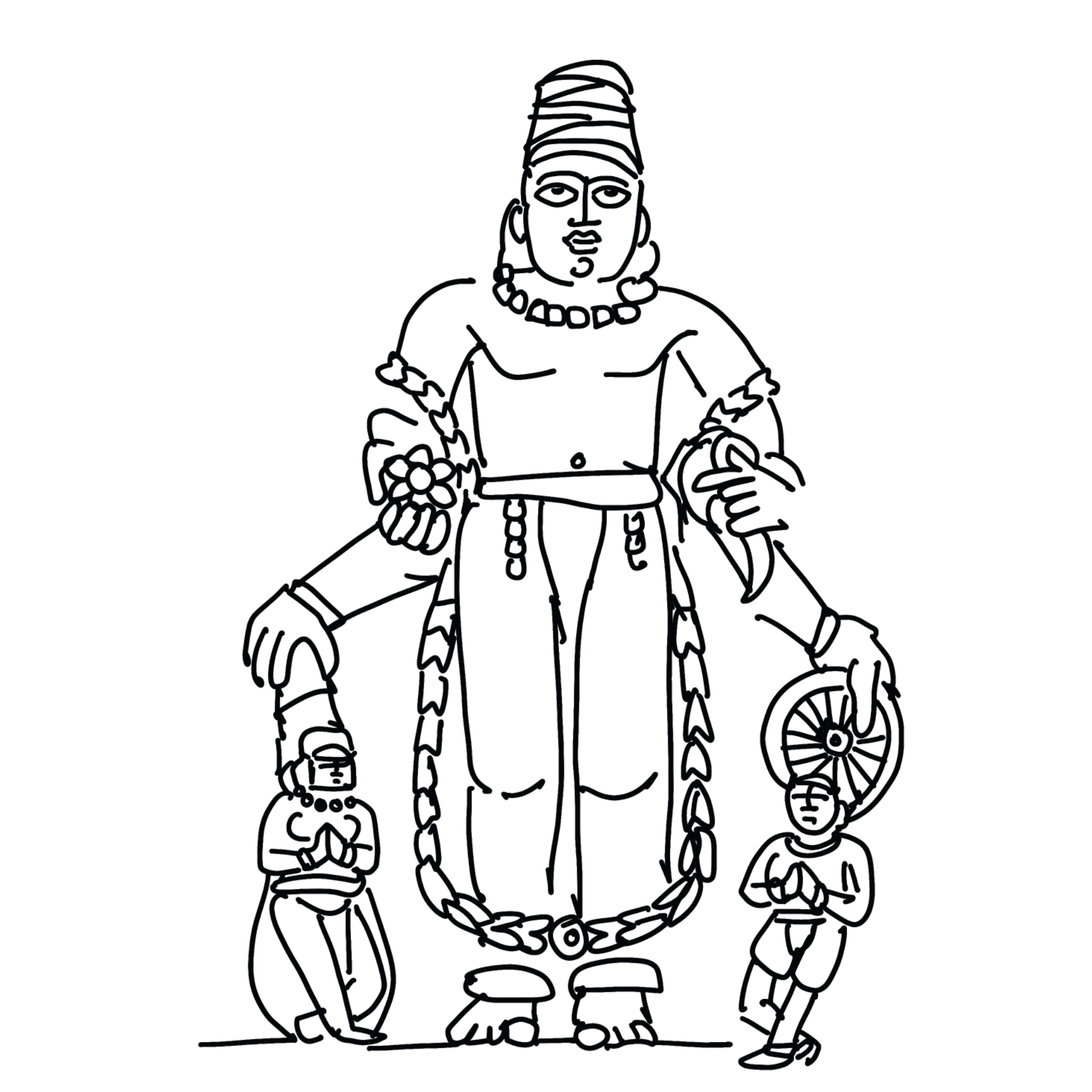
Vast amounts of gold were found in a Vishnu temple in Kerala. Politicians say this was done as a mark of devotion to the deity, or to protect the gold. But the reason was far more pragmatic. The local kings would give their profits from trade to the deity for safekeeping. This wealth would be used to buy grain in times of drought and disease.
This is why merchants exist, says Vikramaditya to Vetala, in an 8th century folktale: to generate wealth in times of fortune so that it can be used in times of misfortune. Both the temple practice and the folktale draw attention to the worldview of ancient Indians. Bad times follow good times, good times follow bad times, like a wave.
But this is not the worldview of monotheistic religions that arose in the Middle East. The Jewish Bible ends with the breaking of the Jewish temple, and the promise of its rise eventually. The Christian Bible turns the Jewish Bible into the Old Testament and in its New Testament declares that resurrection of Jesus Christ is actually the rebuilding of the temple. Temple is a metaphor for the messiah. The Muslims say that the final Messiah appeared six centuries after Jesus, in Mecca to replace ignorance with knowledge. Here there is no concept of rise and fall, owing to tensions between multiple ideas. There is an endless rise of one correct idea.
That is why corporations speak of endless growth, quarter after quarter, despite rise and fall of stock markets. Million-dollar firms aspire to be billiondollar companies which aspire to be zillion-dollar companies. The past is the Old Testament. The future is the New Testament.
Politicians, and businessmen, try this same Western narrative to win elections in India. The building of broken temples. The move towards a trillion dollar economy. The happily ever after. And like Middle Eastern religions, they end up creating Holy Wars and Crusades.
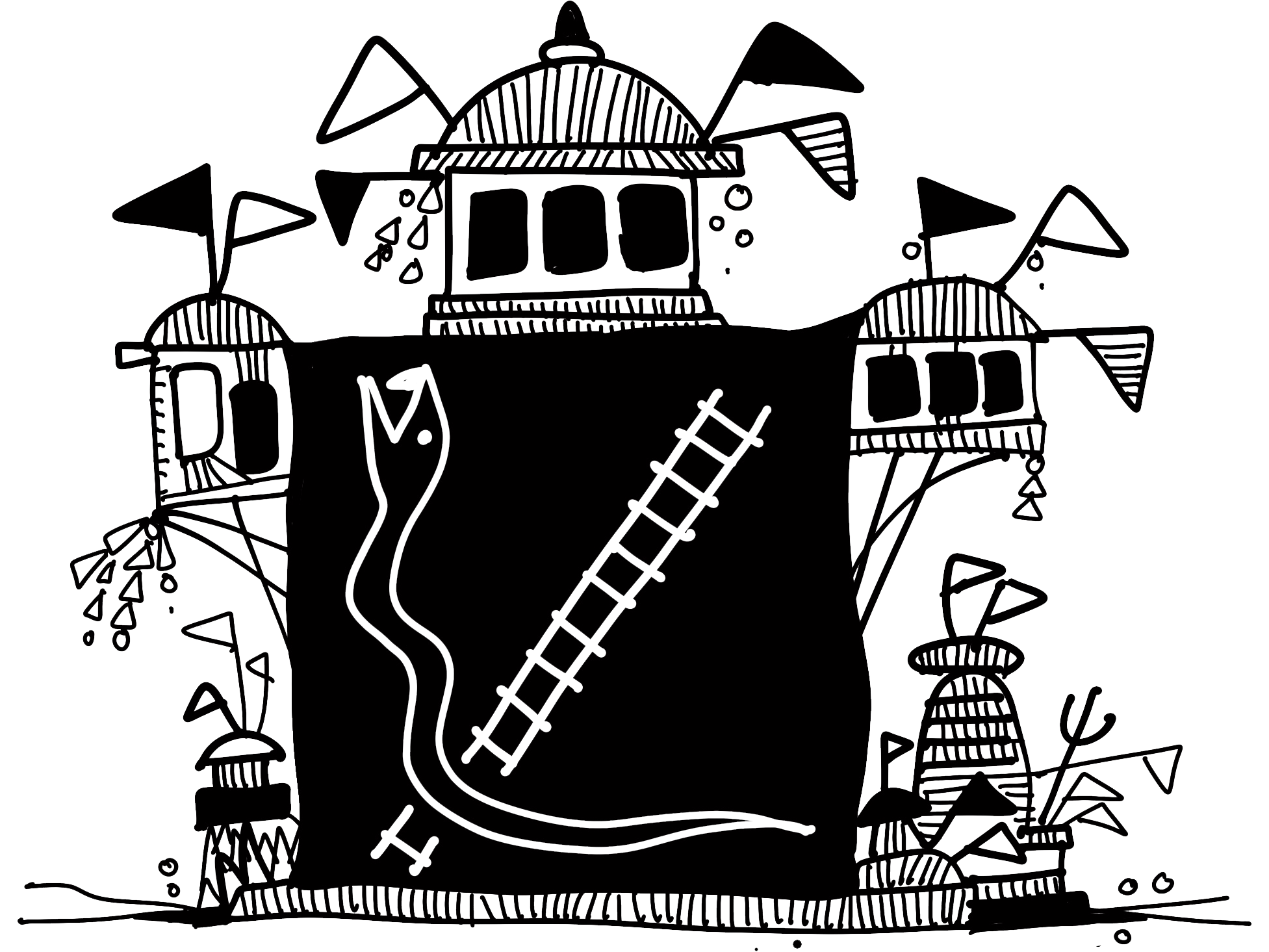
Ancient Vedic ritual halls were set aflame to remind everyone that nothing is permanent. Buddha said the same thing. So did the Tirthankaras. Even today Hindu rituals involve building images of gods using perishable materials like straw, clay and flowers. After a few days of worship, the images are thrown in the river. A reminder that gods who come eventually go away. There is no endless rise, or relentless fall. We rise with ladders and fall with snakes. One follows the other. Such is life’s game.
When Hindu temples were being destroyed by Muslim warlords from Central Asia, the Vaishnava saints used the musical traditions to create temples of songs. In the songs, they created the divine seated in the hearts of the devotees. The entire ritual took the form of bhajans and kirtans. This is what marked the rise of the Vallabha and the followers of Chaitanya. The point was to adapt, find new ways to evoke the divine.
Jain temples were also destroyed by iconoclasts from the Middle East. So instead of building stone structures, they sponsored the writing and illustration of Jain manuscripts. These books could be stored easily. Slowly, as things became safer, temple building resumed. By this time, some Jains even advised against idols and temples, and preferred sustaining the faith through discourses of holy men and women. We never hear of Jain victims or martyrs. The faith speaks of responding to the social realities. The faith reminds the faithful that it is eternal. So it does not need to be saved or sold. Misfortune was never tragedy, just a part of life.
Both Right Wing and Left Wing politicians prefer the Middle Eastern and Western discourse. They argue how the world needs saving and their ideology needs to be evangelised. Businessmen do the same thing. In declarations, they insist that society can be saved if they make more profits. Everyone talks of rebuilding a broken temple, a broken city, a broken system. This ‘global’ discourse needs to be challenged with new ideas. The acceptance of diversity. The acceptance of change. No empire lasts forever. No religion lasts forever. No ideology lasts forever.
When we think with an expiry date in mind, we will deposit our wealth, earned in good times, to benefit those in bad times, like royal gold in temples of yore. Rather than imagine an eternal paradise, we will revel in the snake-ladder game, use ladders to help snakes, and use snakes to restrain ladders. This wisdom of balance, of churning, is the need of the hour.