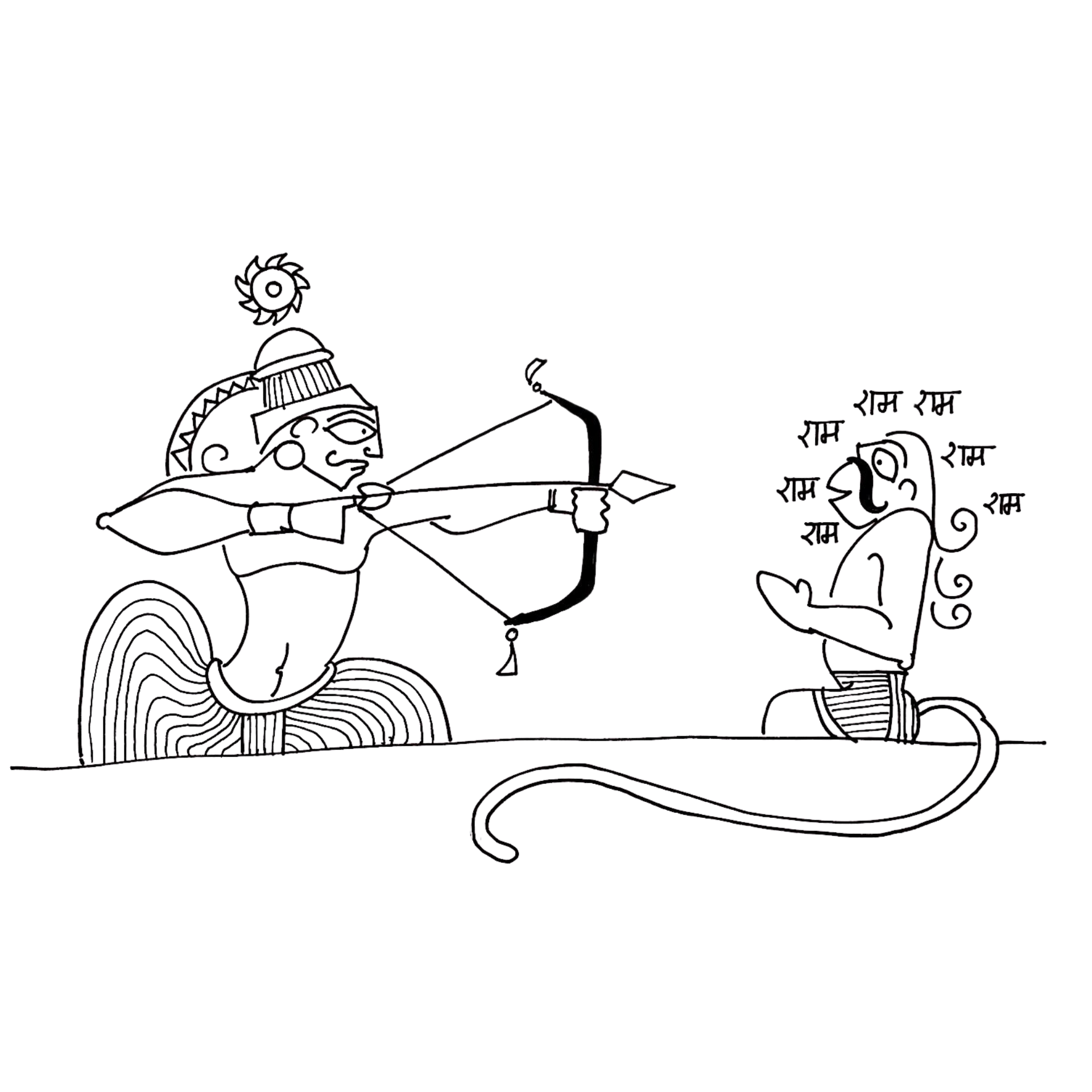
A bus from Satana, in Nashik district of Maharashtra, takes you to two rock pinnacles standing side by side like a pair of raised thumbs. These are the Mangi-Tungi peaks, each over 4,000 feet. Most pilgrims who climb them are Digambara Jains. They come because of a single Prakrit verse. According to the Nirvana Kanda, Rama, Sugriva, and Hanuman attained nirvana here.

So, the vanaras of the Ramayana did not end with Kishkindha. In Jain memory, they ended up as naked monks on a hill in Maharashtra. On Tungi, there are old images of Hanuman, Gava, Gavaksha and Nila, and one cave has Rama’s army chief Kritantavakra shown as an ascetic. Rama’s soldiers are carved in the posture of men who have given up war. These caves were carved 900 years ago by Rajput patrons of Jain faith.

In the Valmiki Ramayana, the vanaras are forest creatures with tails, born on purpose to help a god. The Bala Kanda (sarga 17) says Brahma told the devas to father monkey sons as an army for Vishnu-as-Rama. Vali is Indra’s son, Sugriva is Surya’s son, Hanuman is born to Anjana, through Vayu (Kishkindha Kanda, sarga 66).
The Jains rejected this. In Vimalasuri’s Paumachariya, the oldest Jain Rama story (its date is unsettled, somewhere between the 1st and 5th centuries CE), vanaras are vidyadharas: humans who know magic sciences and fly in vimanas. A prince named Srikantha receives an island full of monkeys from his ally, the king of Lanka. He likes them and puts them on his flags and crowns. His line becomes the Vanaravamsha, the monkey clan. Ravana’s line is the Rakshasavamsha. Same people, different badges. No tails, no gods.
The brothers’ tale
Vali shows the gap most sharply. In the Ramayana, he keeps his brother Sugriva’s wife Ruma after banishing him from his kingdom. When Rama shoots him from behind a tree (Kishkindha Kanda, sargas 16 to 18), the dying Vali calls it cowardice, but Rama argues about a king’s right to punish the strong who harass the weak. The Paumachariya deletes this problem. Its Vali is a devout Jain who bows only to the Jina (victor or conqueror). He defeats Ravana, then sickens of power, hands the throne over to Sugriva and becomes a monk on Mount Ashtapada, near Mount Kailash. Ravana’s vimana stalls above him. Ravana tries to lift the mountain, Vali presses down with one toe to protect the temples, and Ravana is crushed and begs for forgiveness. In the Uttara Kanda (sarga 16), it is Shiva who presses down with his big toe, crushing Ravana.
Vali attains moksha there, at Ashtapada, not at Tungi. Oddly, local accounts list Vali among the 356 carvings at the base of the Mangi pinnacle, so the hill seems to have absorbed him anyway.
Sugriva needs a crisis, so the Jains invent one. A vidyadhara called Sahasagati desires Sugriva’s queen Tara and, using a shape-changing vidya, becomes an exact copy of him. Rama kills the fake. Tara here is Sugriva’s own wife. In the Ramayana, she is Vali’s, and comes to Sugriva only as a widow. Both versions keep one thing: Sugriva grows lazy after victory and Lakshmana has to shake him awake.
It’s all in the ending
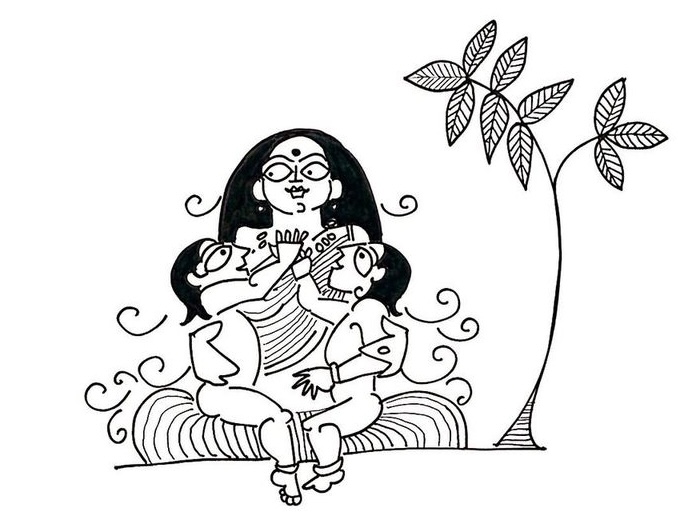
Hanuman’s name splits the traditions neatly. In the Uttara Kanda (sargas 35 to 36), baby Hanuman leaps at the sun, Indra’s vajra strikes him, and his jaw (hanu) breaks. In the Paumachariya, his mother Anjana, wrongly expelled as an adulteress, is carried home by her uncle Pratisurya in a vimana. Baby Hanuman falls onto a rock and the rock shatters. He grows up on the island of Hanuruha, so he is Hanuman. In one story, the baby breaks. In the other, the rock does.
Then, marriage. The Hanuman of most Hindu temples is a brahmachari, though Valmiki never makes a point of it. The Jain Hanuman is a Kamadeva, one of the most beautiful men of his age, and Ravishena’s Sanskrit Padmapurana (677 CE) gives him many wives, including Anangakusuma, daughter of Khara and Ravana’s sister. When Lakshmana kills Khara, Hanuman loses a father-in-law but sides with Rama, regardless.
The endings tell you everything. In Valmiki’s last sargas, the vanaras follow Rama into the Sarayu and go back to the gods who fathered them. Hanuman alone stays on earth as long as the story is told. In the Jain telling, Rama, Hanuman, Sugriva, Nila and the rest climb Tungi, fast, and leave the world for good. The Hindu vanaras return to heaven. The Jain ones leave a hill in Satana taluk with nobody left to return to.