Published on 11th January, 2015, in The Speaking Tree.
The root of religion is imagination. We can imagine a world where there is no hunger and death and so we imagine heaven. We can imagine a being that is sensitive and kind and generous and unconditionally loving, and so we imagine god. Take away imagination, and there is no heaven or God. It is a world where there are no possibilities.
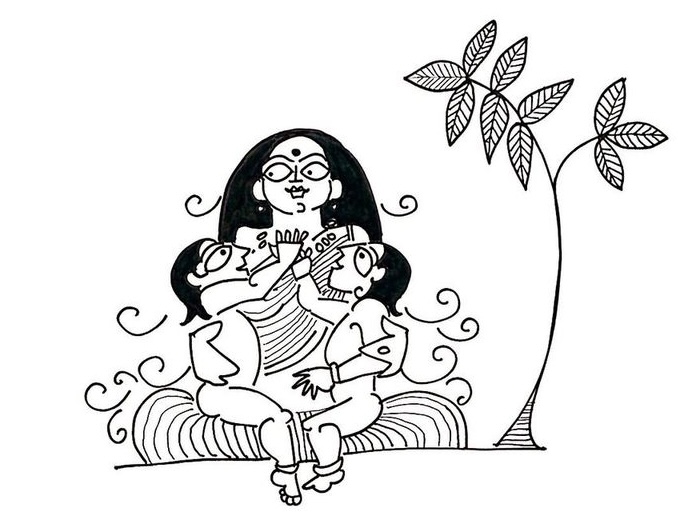
Early tribal societies saw God in forces of Nature and its many rhythms. They mapped their lives to these rhythms. Religion celebrated the change of seasons, migrating and breeding cycles of birds, fish and animals, flowering of trees and movements of stars. And so came about rituals, songs and dance full of rhythm.
Rhythm of Nature.
With the agricultural revolution, we had learnt how to control the rhythms of nature. We could decide what food crop to grow and what should be pulled out as weed. Some plants came to be more valued than others. Animals could be caught and bred. The rhythm focussed on sowing and harvesting. But harvest was not predictable. Sometimes, there was plenty of food. At other times, there was scarcity. Our control over nature was an illusion. Worship of fertility goddesses began, perceived as those who could ensure great harvests and improve breeding capabilities of livestock, as those who could kill demons that caused drought and disease. Food stock had to be protected from thieves. So began the worship of guardian gods who protected the village.
With prosperity came trade, and cities grew. With cities came the need for rules. Man-made rules could be overturned, but not those believed to be created by gods. Thus, the nature of religion changed. It was all about gods determining rules of how city people should live. The gods reduced the number of disputes; they offered the promise of fairness and justice.
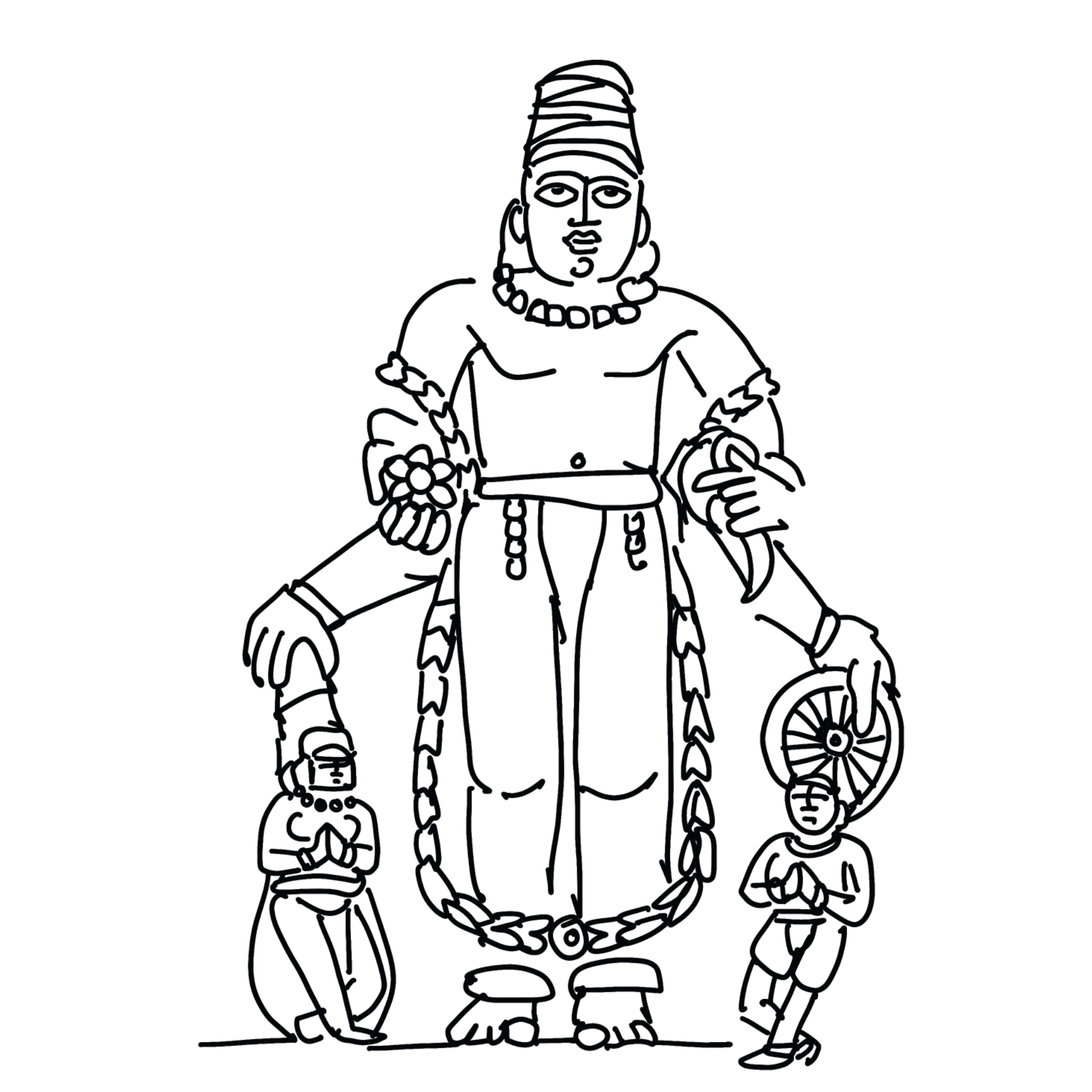
The different gods of different cities fought with each other as they had different rules and measures of justice. There was need for one God, one greater than other gods, the Father God who disciplined all, who was distinct from the cities, farms and from the forest. Thus, polytheism gave way to monotheism. Different people fought as to whose god was the only real God.
All through, as human society made its journey from tribal to agricultural to urban societies, everyone wondered what it means to be human. Elements exist to be eaten by plants, plants exist to be eaten by animals, animals exist to be eaten by other animals…. Humans want to eat plants and animals, but do not want to be eaten by anyone. What then is the purpose of human existence? Nature has no answer. So, there is speculation. From speculation come stories that give humans purpose. Story 1: there is one life and achievement in this life reserves a place for us in the heaven of heroes or earns us the admiration of ancestors or transforms us into a god. Story 2: there are many lives, this is but one of them, and the more we try to control it, the more we suffer; the more we detach ourselves, the more at peace we are. To be truly peaceful is to be one with God.
Thus, the idea of religion is rooted in our desire to understand and control the external world, both nature and culture, as well as from the human desire for meaning and validation.
As we logically analyse the world today, we realise that notions of gods and God, goddesses and Goddess, demons and Devil, are various mental constructs to help us go through life. They are not real, in the sense they are not measurable. But they are real, in the sense of the psychological, serving as anchors for the unfettered, restless and frightened mind. Take away religion, and you take away anchors for the human mind. You take away purpose, and meaning.
Science cannot give humanity purpose. Rationality cannot give human life meaning. In nature, humans are nothing but animals with imagination. Only in human imagination are humans special.
Religions provide humans with maps that help them navigate through life. Yes, religions cause violence because from religion comes the notion of identity. Religions locate us in a cosmic super map. Attack religion and you attack identity, a simple fact that rationalist and atheists do not understand. Often logic manifests as smug self-righteousness lacking compassion. And that is not a good thing.