June 15, 2018

First published June 14, 2018

Keeping it Queer: S02E20

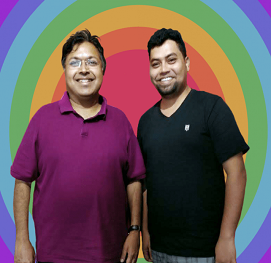
On this episode of Keeping it Queer, author Devdutt Pattanaik joins Navin Noronha to have an in-depth discussion about:

  • How he was first introduced to Indian mythology.
  • How people don’t read enough history before interpreting religion.
  • How India’s greatest monk wrote the best book on erotica.
  • How he was exposed to all kinds of cultures as a child in the Pre-Hindutva era.

In the Culture Vulture segment, Farhad and Navin take an in-depth at the new film ‘Love, Simon’ and the issues
surrounding it.

You can talk to Devdutt at @devduttmyth
Follow Navin on Twitter @houseofnoronha

You can listen to this show and other awesome shows on the IVM Podcast App on Android:
https://goo.gl/tGYdU1 or iOS: https://goo.gl/sZSTU5

You can check out our website at http://www.ivmpodcasts.com/


Recent Books

  • flowers of india book

    Flower of India: Ways of Seeing the Lotus

    In Flower of India, bestselling author and renowned mythologist Devdutt Pattanaik examines the lotus as one of the most pervasive and resonant symbols of the Indian subcontinent. Through its many avatars—as plant, resource, metaphor, design, and sacred form—he traces how the lotus has shaped India’s cultural imagination across history, religion, art, and everyday life. Concise…

  • astra shastra

    Astra Shastra: Weapons of the Hindu Gods

    Well-known mythologist Devdutt Pattanaik introduces young readers to the wonderful weapons of Hindu gods with his unique art and easy-to-read text…

  • Escape the Bakasura Trap : Let Contentment Fuel Your Growth

    This book re-discovers this path, first revealed by Hanuman in the Mahabharata. Insightful and inspiring, Escape the Bakasura Trap is another classic from one of our great mythologists and thinkers…

  • लंकेश: रावण संग एक रोमांचक यात्रा

    यह पुस्तक भारत के सबसे विख्यात महाकाव्य रामायण और इस कारण भारत के सबसे बड़े खलनायक, रावण, को विस्तार से जानने की राह खोलती है।…

Recent Posts

  • Upanishads As Against Dharma-shastra

    Upanishads As Against Dharma-shastra

    In the Upanishads, the word brahmin is about inner realisation. In Dharma-shastra, the word brahmin is about birth status and purity. The early Upanishads were composed between 600 BC and 200 BC, while the early Dharma-shastra were composed between 200 BC and 500 AD. The former is more spiritual. The latter is more legal. …

  • Sanatan Dharma: A Hinduism That Defines Itself Through Food ‘Purity’

    Sanatan Dharma: A Hinduism That Defines Itself Through Food ‘Purity’

    Notably, the term “satvik” food does not appear in Ayurveda, yet it has become central to the Sanatan Dharma movement. North Indian temples now demand that no meat-serving establishments operate within 15 km of their premises. This dietary politics points to the real character of the movement: Sanatan Dharma is essentially a vegetarian Hinduism, promoted…

  • Imagining Hinduism Without Caste

    Imagining Hinduism Without Caste

    For centuries, what we now call Hinduism was never a single religion. It was a civilisation organised through caste. Each caste had its own gods, rituals, food rules, taboos, and ideas of the sacred. Diversity was not accidental; it was structural. To imagine a caste-free Hinduism is therefore to imagine uniformity. Who defines it then?…