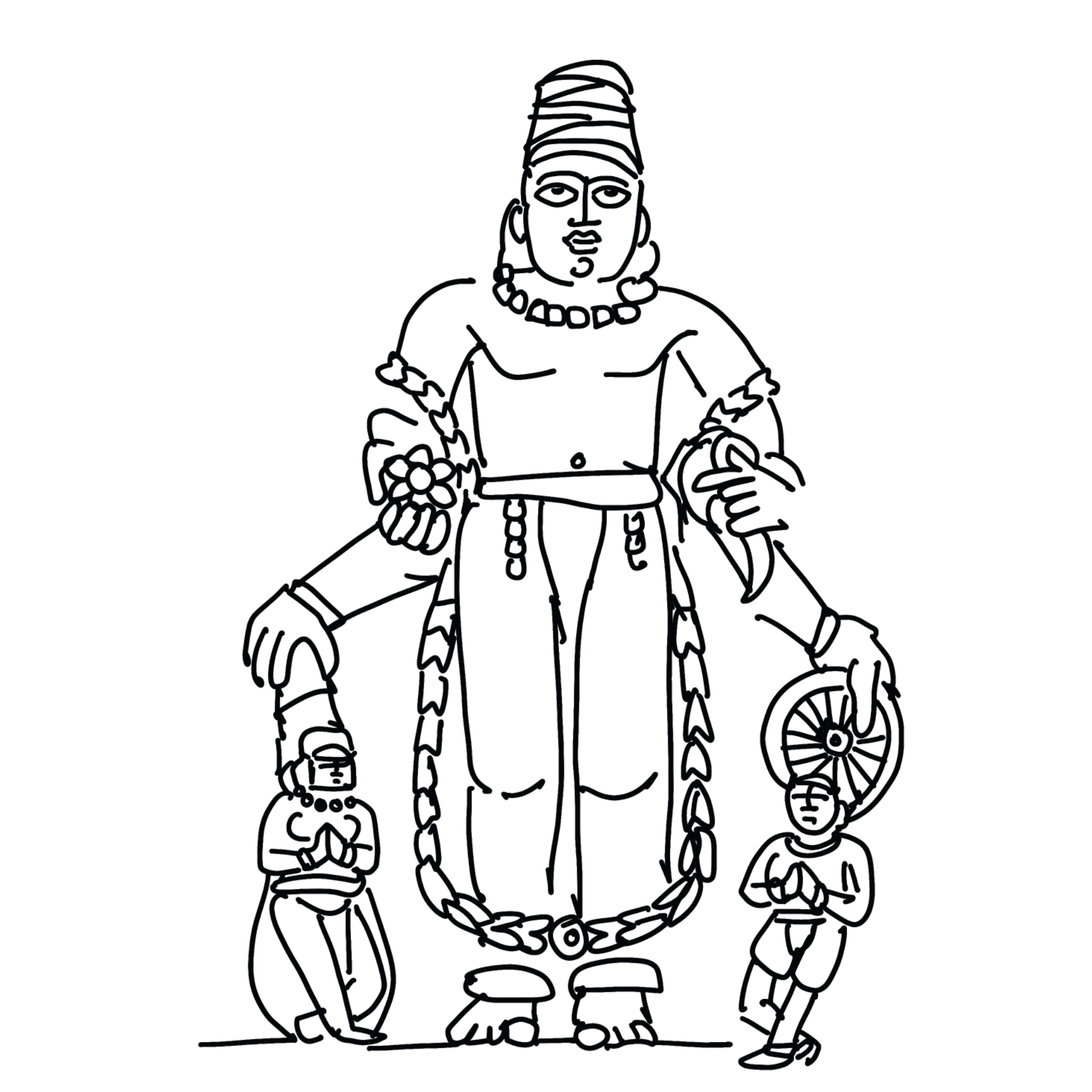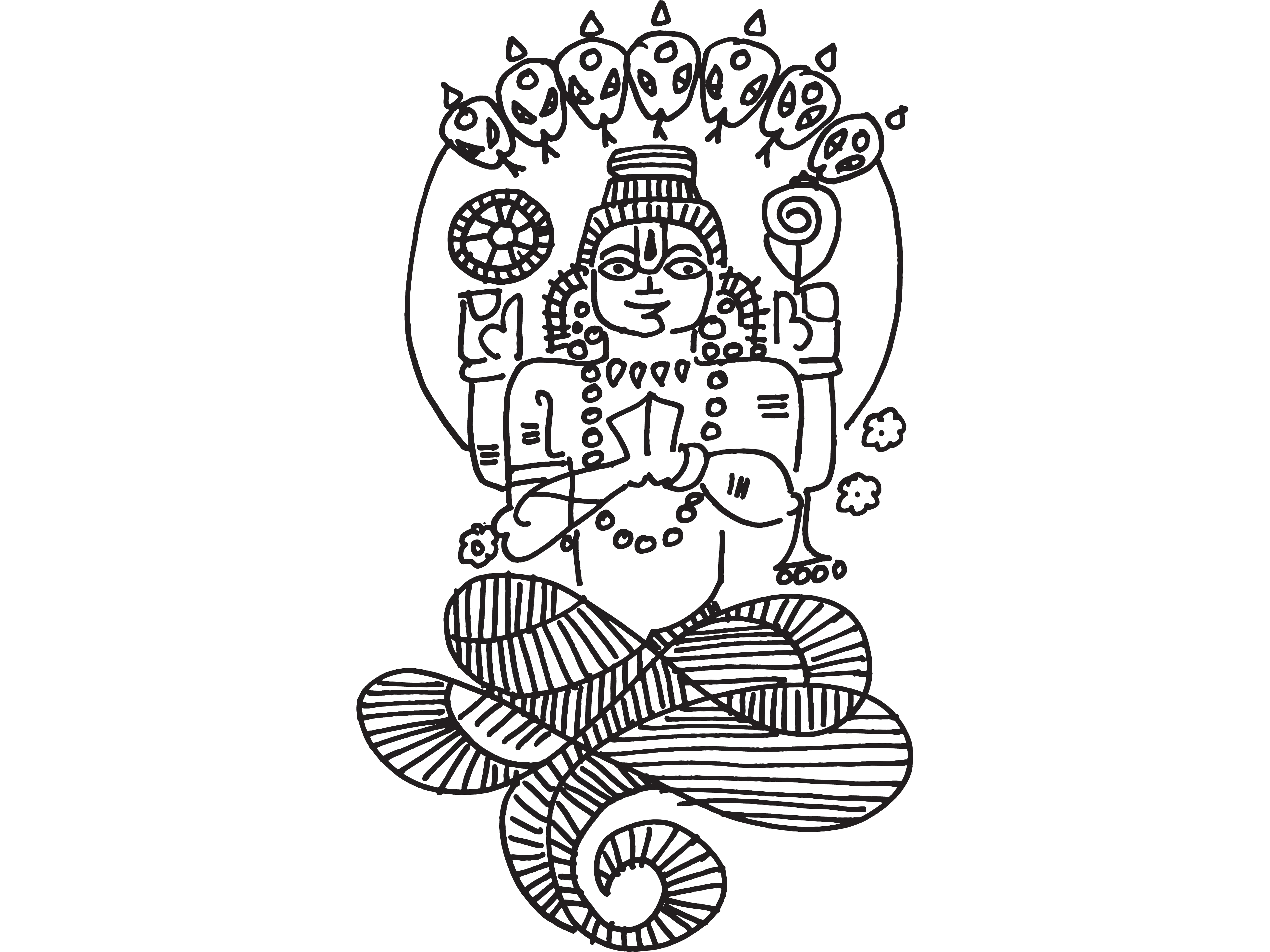
The serpent is conspicuous by its absence in Harappan seals, and in Ashokan artworks. Serpent worship is not part of Vedic texts. Multi-headed hooded serpents first appear in Buddhist shrines, at Sanchi and Bharhut. They appear as adoring symbols of Buddha. Then, the serpent-gods are shown sheltering the Buddha and the Tirthankara under their hood.
Coiled serpents and inter-twined conjugal serpent pairs appear as sacred symbols on Hindu temple walls. They reflect sacred ideas from beyond the Vedic world, where communities venerated serpent groves, filled with termite mounds, which served as entrances to a subterranean world of magical beings — the Naga, serpents with hoods, multiple heads, and the magical ability to appear as humans.
Naga was linked to water bodies, to fertile earth, to child-bearing, health, restoration of youth, to magical gems, to occult secrets, to all things hidden under the earth and beneath the conscious mind. Today we cannot imagine Hinduism without Nagas.
Vedic world spoke of three realms: the sky, the earth and the atmosphere in between. It spoke of eagles travelling east to fetch the sacred Soma herb. It spoke of Indra killing the serpent-like Vritra who binds the waters. But there was no explicit reference to serpents. Instead, Vedic altars were designed like grand eagles, flying east.
The epic Mahabharata introduces the serpent beings, who live under the earth, who are in conflict with the golden eagle, Suparna, their half-brother, son of Rishi Kashyapa. This is part of the oldest Vedic lore known as Suparna-akhyan, tale of the golden eagle. It foreshadows the conflict between the five Pandavas, linked to Vedic gods, and the hundred Kaurava brothers, who control the land. Forests inhabited by the Naga are set aflame to build the city of Indraprastha and this leads to a series of revenge attacks, lasting over generations, between Kurus and Nagas. Did the Aryans see themselves as the golden eagle, flying east into Naga territory? Does Mahabharata, which tells stories of the earliest Vedic kings, capture that memory?
The tension expands in Puranic lore, when a Naga is shown coiled on the body of Shiva (Hara), around his neck, while a Naga is shown coiled below the body of Vishnu (Hari), as he sits or reclines on Adi Ananta Sesha. Shiva is the god who destroys the yagna ritual site, while Vishnu is described as the embodiment of the yagna itself. Shiva uses the serpent-king Vasuki as the bowstring and Mount Meru as the bow-shaft to destroy the three worlds; Vishnu uses the same serpent as the churning rope and the same mountain as the churning rod to churn treasures, including nectar of immortality, out of the ocean of milk.
However, serpent-lore is integral to Hinduism. In fact, the epic Mahabharata is framed around the story of the battle between the eagle Suparna and his half-brothers, the Naga. It foreshadows tales of other sibling wars, between Devas and Asuras, between Yaksha-king Kubera and Rakshasa-king Ravana, between Vali and Sugriva, between the hundred Kauravas and the five Pandava. The battle between eagle and serpent becomes a theme of endless rivalry between predator and prey, similar to the rivalry between serpent and mongoose, crocodile and monkey, goat and tiger.