
Published on 25th September, 2016, in Mid-day.
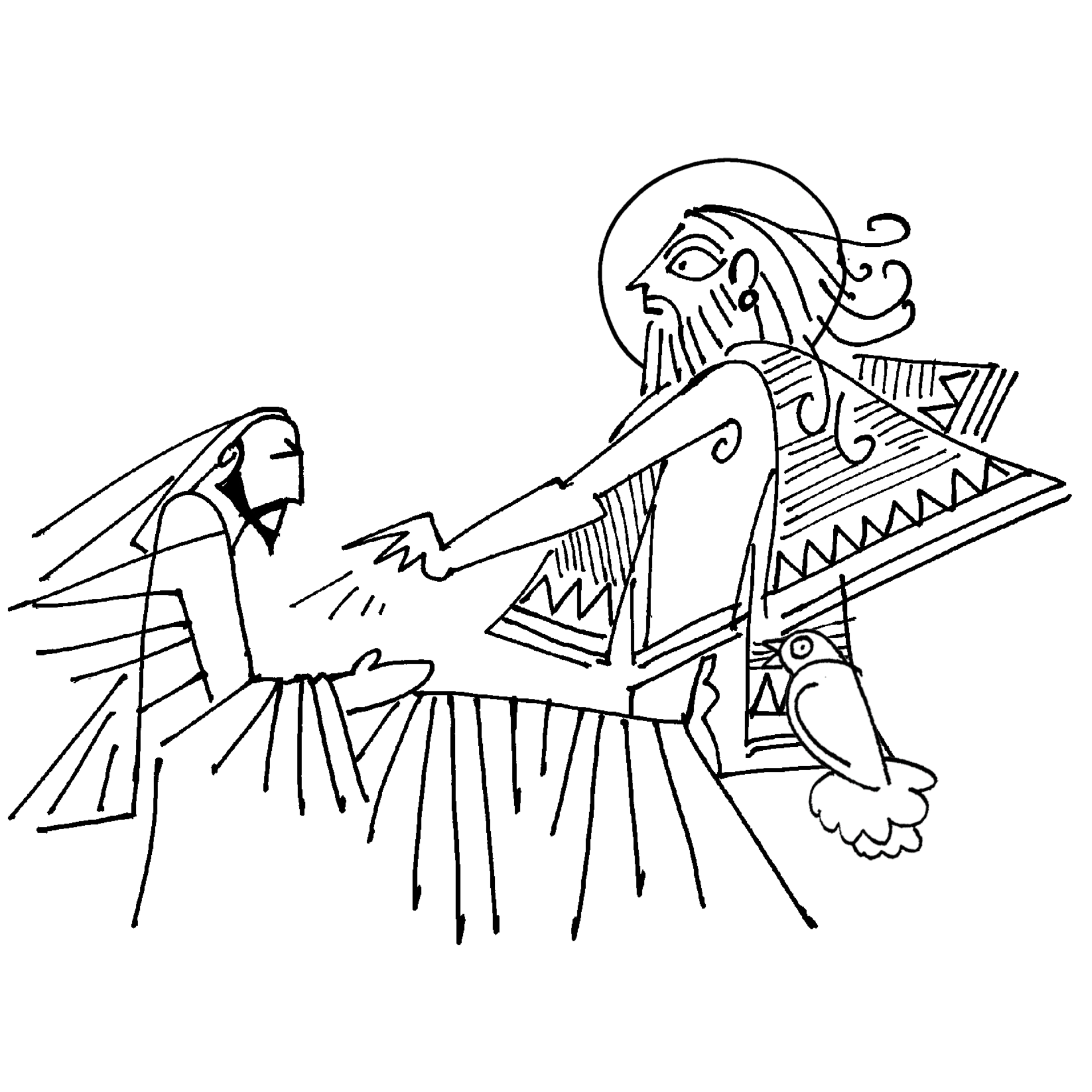
The idea of measurement is a key theme in Hindu mythology. Stories from the Puranas introduce us to the complexity of measurement. A king says that he will give a dwarf all the land he can cover in three strides. The dwarf then transforms into a giant, his head reaching beyond the stars, his feet reaching beyond the bottom of the seas, and with two strides covers the whole material world. “Where do I place my foot after taking the third stride, king? Show me a spot that is not mine,” the dwarf-turned-giant demands. The king bows his head and offers his head, seat of his arrogance that failed to see that three measures of man are not quite the three measures of God.
The same idea is found in temple lore. At the entrance of many Tamil temples dedicated to Perumal or Vishnu, there are doorkeepers, Jaya and Vijaya, who warn the devotees with an upraised index finger to pay attention to what they see at the doorway and beyond, in the sanctum sanctorum.
As we observe the image of the two doorkeepers, we notice that their feet are placed on a mace and a snake coils around this mace. In the jaws of this snake is an elephant. Suddenly, we become aware of how tall these doorkeepers are. The icons are diminutive representations. The devotee is thus made to realise he is small, tiny and in the presence of one who is the embodiment of infinity. This is why Vishnu is addressed as Ananta Vasudeva, which means Lord (deva) of the infinite (ananta) world (vasu).
And, yet the idea is turned on its head through a Tamil devotional hymn, which says who is greater than Brahma, creator of the world? Vishnu, we are told, since Brahma resides on the lotus that rises from his navel. And, who is bigger than Vishnu? The serpent Sesha on whose coil Vishnu sleeps. And, who is bigger than Sesha? The ocean of milk on which the serpent floats. And, who is bigger than the ocean of milk? The great world or bhu-mandala with its seven oceans and seven continents. And, who is bigger than bhu-mandala? The great serpent on whose hood resides bhu-mandala. And, who is bigger than that great serpent? The Goddess, who wraps this great serpent around her finger as a ring. And, who is bigger than the Goddess? Her husband, Shiva, on whose lap she sits. And, who is bigger than Shiva? Shiva’s devotee in whose heart Shiva resides.
Why is measurement so important? Humans measure and compare. And, this contributes to our sense of identity, and our sense of superiority and inferiority. The world that we see through measurement is called “maya”, which comes from the root “ma” that means to measure. As long as we value ourselves by measuring ourselves against other people, we will be trapped in the world of maya, and that will cause sorrow. So, there is sorrow in schools where report cards measure children against each other, and in offices where employees are measured using the appraisal system. Rich people feel poor when they learn of people who are richer. Thin people feel fat when they see others, who are thinner. In Vedas, God is that infinite denominator of imagination, located in our heart that wipes out all measurement and comparison, and grants us peace.