ASAP is a popular acronym for ‘as soon as possible’. But more often than not it is used to mean ‘immediately’ in corporate circles. In political, bureaucratic and judicial circles, it depends on the relationship of the beneficiary and the benefactor. If the beneficiary is powerful, then ASAP means traffic lights are stopped to get to the meeting, files are passed quickly, the judgment is given at midnight. If the beneficiary is powerless, then ASAP means you wait endlessly for the appointment, the file gathers dust, and the wheels of justice grind slowly.
That Hinduism is increasingly referred to as Sanatan Dharma or Eternal Code of Conduct reveals the value placed on eternity, a concept of time without endings, without deadlines, without full stops. Time is clearly a fluid concept, moving fast when you are happy and slow when you are sad. Timelines and timetables and appointments are a function not of what is to be done, rather who it involves.
The Puranas state that the lifespan of a human is equal to Indra’s blink; the lifespan of Indra is equal to Brahma’s blink; the lifespan of Brahma is equal to Vishnu’s blink; the lifespan of Vishnu is equal to Shiva’s blink; the lifespan of Shiva is equal to Devi’s blink. This is a metaphor to draw our attention to how time has different meanings in different contexts.
As humans, we do not think too much about the lifespan of a mayflea (a single day), or a flea (100 days), or a cockroach (300 days). Likewise, a glass sponge that lives for 10,000 years or a turtle that lives for 200 years, may not think so much about the human sense of urgency to save the world in one lifetime, or a politician’s determination to change the fate of a nation in one political term.
Those in positions of power can destroy millions of ‘lesser’ lives with a single decision, taken in the blink of an eye. So, the higher we rise in the ladder of power, the more power our blink has, the more sensitive we have to be to the sufferings of those who live below. Even as politicians, bureaucrats and judges play their games of time management, in temples, gods with large silver eyes stare endlessly, reminding all that their arrogant reign is infinitesimal with a denominator of infinity.
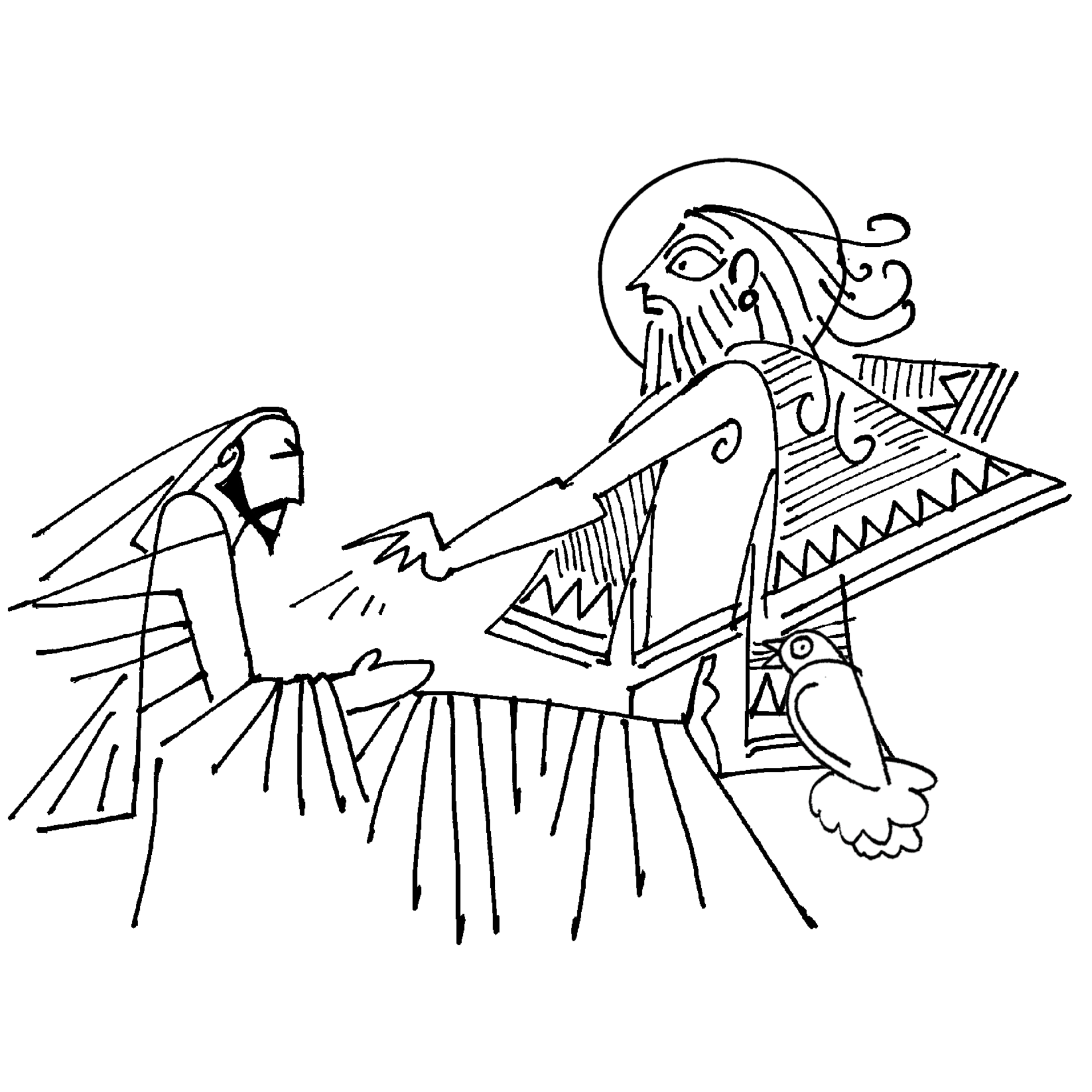
Narad once made Vishnu wait. Narad is a Brahmin sage of Hindu mythology who claims to be Vishnu’s greatest devotee. Vishnu smiles and plays tricks on Narad to demonstrate the latter’s conceit. Vishnu asked him to fetch some water as he was thirsty, too parched to walk to the river. Eager to serve Vishnu, Narad promised to be back as soon as possible. At the river, Narad saw a beautiful woman and was besotted by her beauty. He asked her to be his wife. She agreed. They married. They had children. The children grew up and got married. Narad lived a happy life with wife, children and grandchildren. All on the banks of that river. Suddenly there was a flash flood. It swept Narad’s home away. He tried to save his family, but they all drowned right before his eyes. Save me, he cried. A hand pulled him out. It was Vishnu’s. Failing to recognise Vishnu, Narad begged his saviour to rescue his family from the flood. But then Narad realised there was no water around: no flood, no family, just a water pot in his hand. Vishnu smiled and asked in a parched voice, ‘So where is my water, Narad?’ Narad realised that generations had passed in his mind. All this while, Vishnu stayed thirsty.
This is what happens when we get distracted by our desires, our thirsts, our hunger and forget the desire, the hunger and thirst of those around us. Time passed quickly in Narad’s happiness. But for the thirsty Vishnu, time passed very slowly.
We live in a world where different people blink differently. Judges blink differently from prisoners awaiting a bail hearing. Road contractors blink differently from those who walk, drive or live on roads. Governors blink differently depending on which political party the chief minister belongs to. We see people in the highest positions of power blink fast to help their favourites succeed. They blink slowly to ensure their rivals fail. For all talk of Neo-Vedanta, these powerful people are only obsessed with the cravings of their tribe, caste or party while Janata-Janardan (citizen), the Vishnu of democracy, remains thirsty.