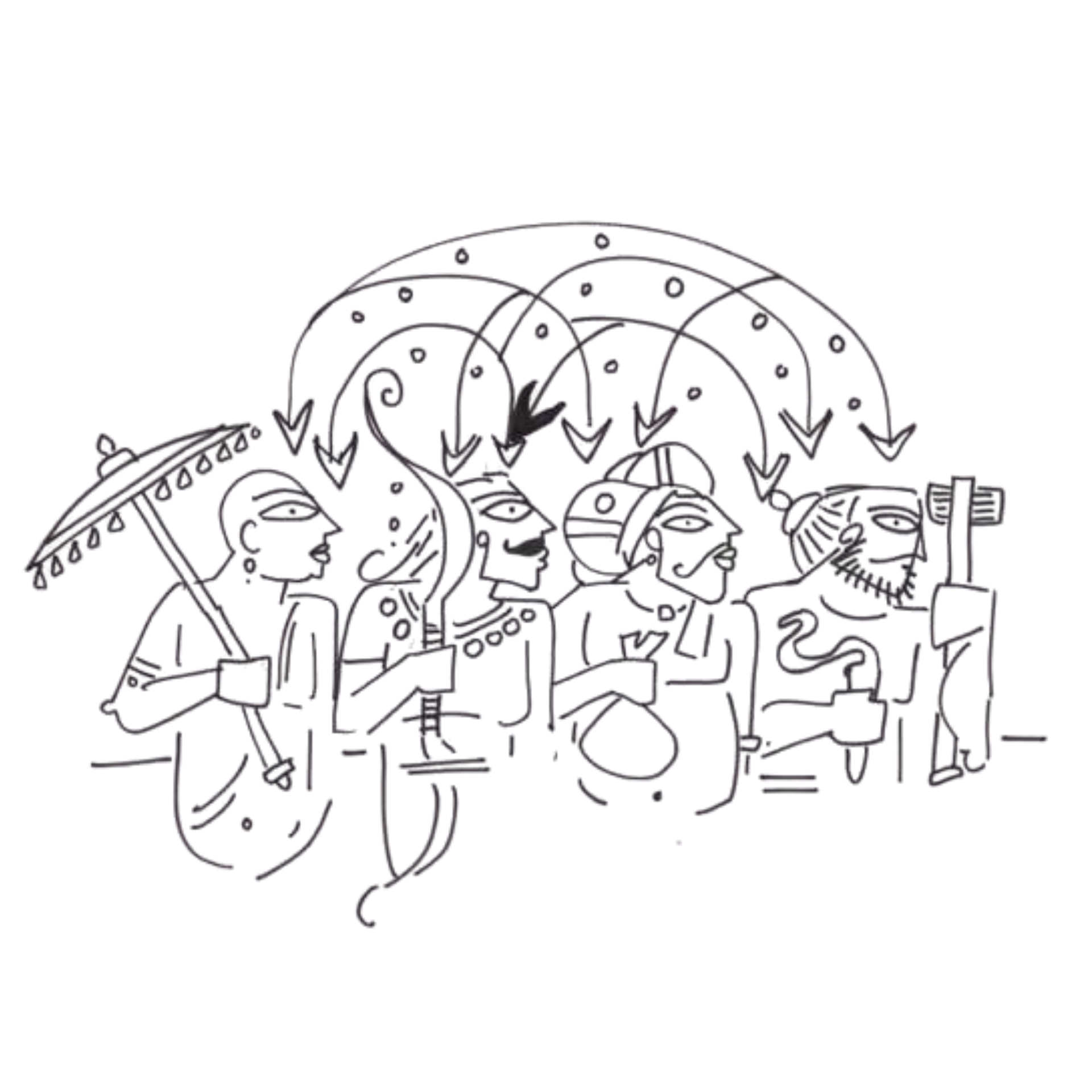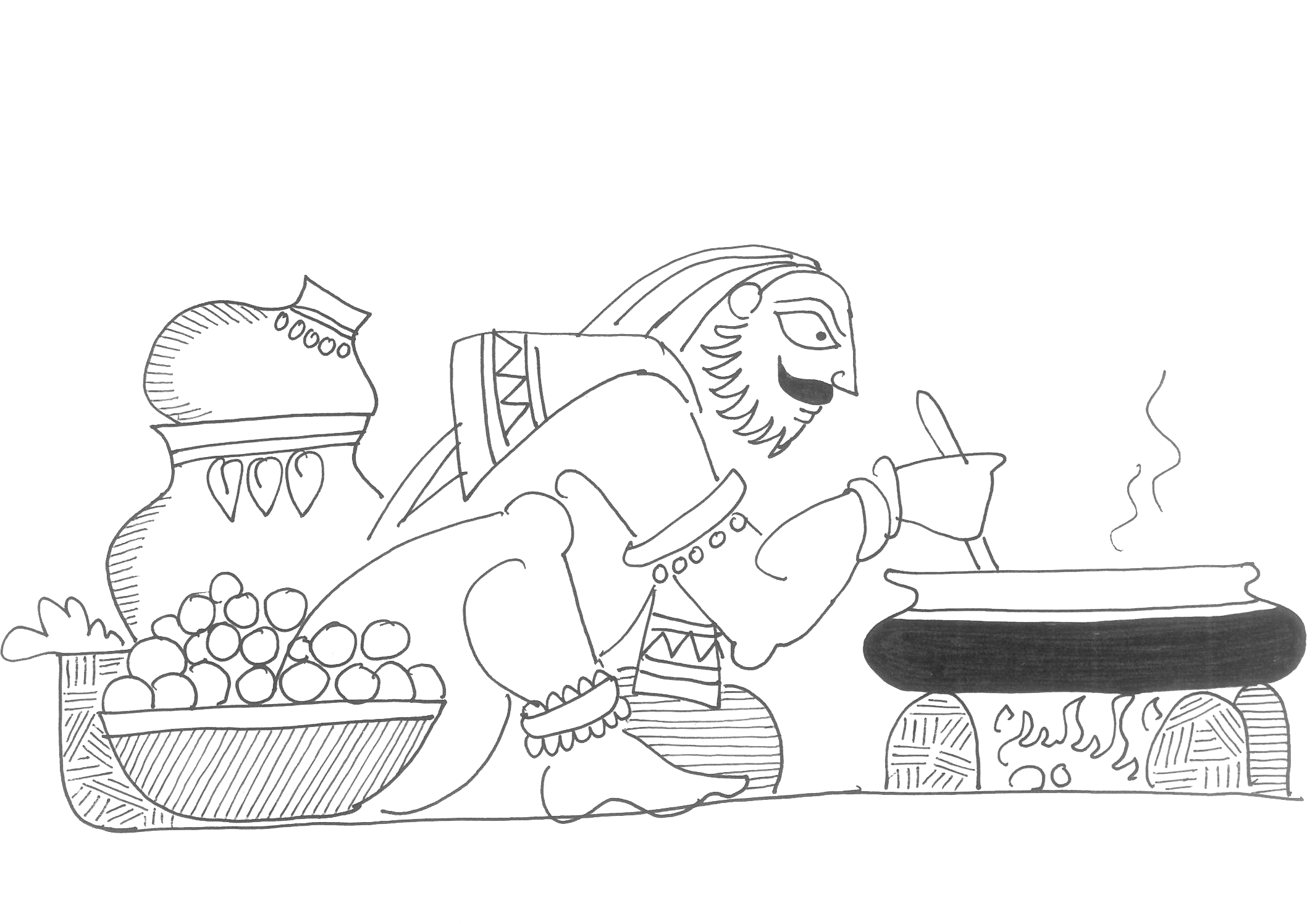
Have you ever wondered why, in many parts of North India, the cook is called a Maharaj? This may have something to do with the way the cook treats the kitchen as his sovereign territory that no one can trespass. Or, it may have something to do with the legend of a king who in adverse times was forced to serve as a cook and hide in another king’s kitchen.
In the Mahabharata, we hear of two such tales of king who hide in kitchens. The first is Bhima, the second Pandava prince, who loves to eat food. In his 13th year of exile, when he’s supposed to be in hiding, he serves as a cook named Ballava, in the royal kitchens of Virata, king of Matsya Desha. So, the man who loves food now cooks food and feeds others, before he can eat himself. Bhima takes up this role after sages tell him the story of Nala, during their stay in the forest.
Nala was a very handsome prince who was envied even by the gods. He married a beautiful princess called Damayanti. They had a very happy life until one day, he gambled away his fortune to his jealous cousin, Pushkara. Ashamed of the loss of fortune, he ran away from his wife, changed his appearance, made himself ugly and hid in the kitchen of King Rituparna.
Damayanti returned to her father’s house but refused to give up on Nala, who was obviously depressed. To locate him, she told her spies to scour the land for a man who was multi-talented: he could write poetry, solve puzzles and riddles, was a great cook, a great charioteer, but terrible at gambling. The spies found such a man in the kitchen of Rituparna. But he was terribly ugly.
Damayanti managed to draw him out of the kitchen. Nobody believed he was Nala, as he was so ugly but Damayanti said a man is a function of his talent not his looks. The man had to be Nala, as he could compose poetry, solve riddles, win chariot races, and cook great food. He was only bad at gambling. Realising how much his wife loved him, Nala regained his original form and all was well with the world.
In both these stories, the kitchen is seen as a place to hide. The story of Nala is sometimes equated with a cosmic event and the change of seasons. In it, the misfortune of Nala is equated with the southern movement of the sun, which is linked to autumn and winter. The return of Nala is equated with the northern movement of the sun, linked to spring and summer.
The story reminds us how an artist is recognised through his art. A king is recognised by his kingship, a cook by the food he serves, a poet by his poetry. The story privileges talent which grows with time, over physical beauty and even fortune, which wanes with time. More importantly, the story talks about the love of a wife who stands by her husband even through bad times and values him for his talents not his looks.