Published in Devlok, Sunday Midday on Dec 04, 2011.
I recently went to the exhibition of Sudarshan Sahoo, master stone carver from Orissa at Jehangir Art Gallery. As I was watching the images, my eye fell upon an image of Krishna, standing with flute in hand. What caught my eye was the nose-ring worn by Krishna on the right side of the nose (women traditionally wore it on the left side, and men on the right). I smiled as few notice the right-side nose-ring on the face of Jagannath, the form in which Krishna is worshipped in Orissa. Noticing me smile, the sculptor said, “Krishna of the Raas-Lila wears everything that women wear. Not just nose-rings but also earrings and a long plait. His eyes are lined with kohl and his feet are painted with alta and made red like a dancer. He is God who is comfortable in female attire.”
In temples across India, amongst the many attires of Krishna is one called Stri-vesha, where he dresses as a woman. Krishna is shown wearing a sari and women’s jewelry. Some identify this as a form of Mohini, the divine enchantress, an avatar of Vishnu and Krishna. Some say this is Krishna dressing up like his mother Yashoda to amuse her. Some say this is Krishna being punished by the Gopikas.
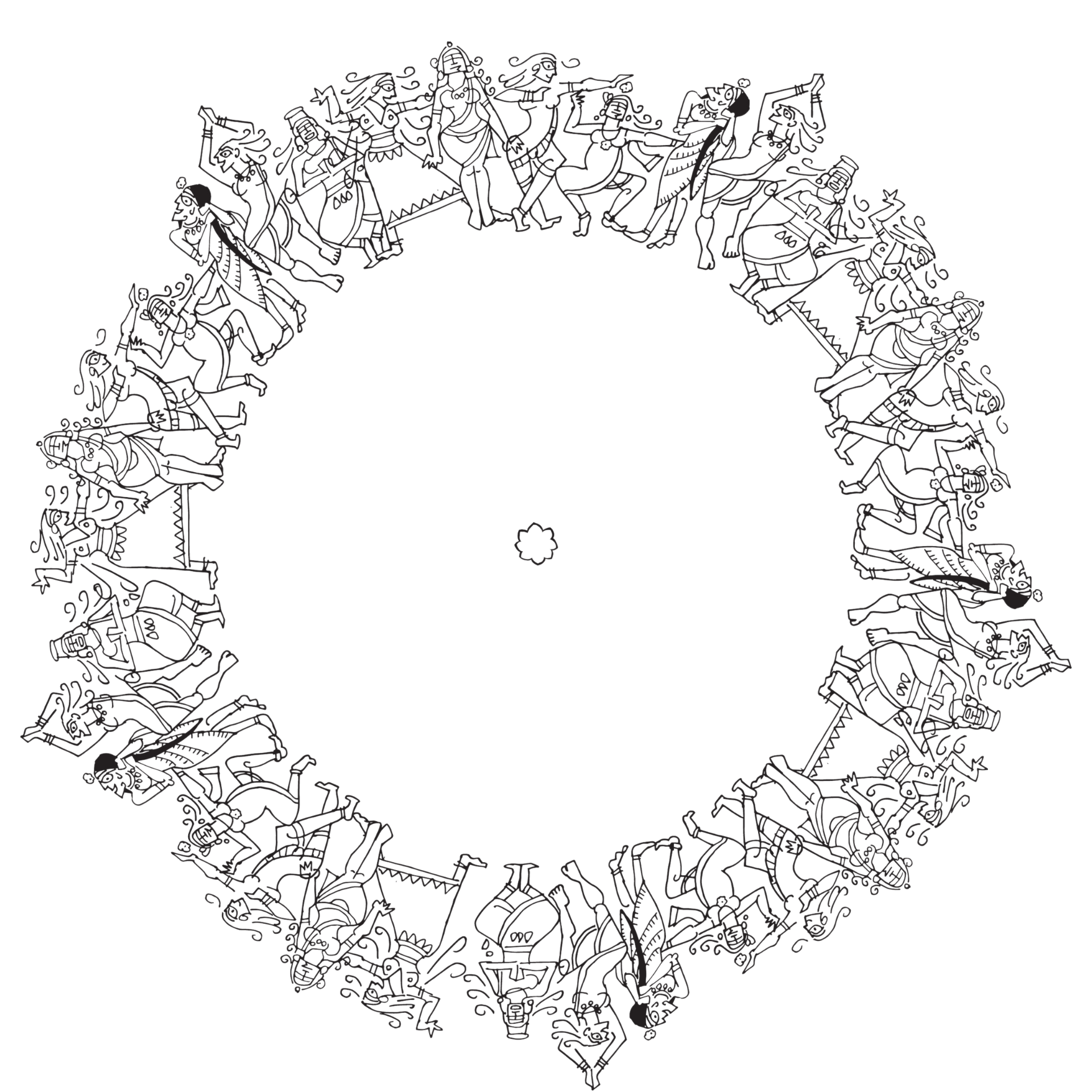
The story goes that tired of the pranks of Krishna, the women of Gokul once got together and decided to dress him as a girl. The lyrics “Nar ko Nari banao” (make the lad a lass) is a popular Thumri composition. They grab Krishna and make him wear a skirt and blouse and paint his hands and feet with alta. To their surprise rather than being upset or angry, Krishna participates in the activity. “More jewelry,” he demands, “and better make up.” Thus what begins as a punishment ends up as a joyful activity, a game, a leela.
In another story known as “gore gvala ki leela” (the game of the fair cowherd), Radha and Krishna one day exchange each other’s clothes. Krishna dresses up as Radha and Radha dresses up like Krishna. This is done at Radha’s insistence, as she wants to feel like Krishna. But then she realizes even though she wears Krishna’s clothes her heart is still Radha’s. “Oh Krishna, you can look like me but you will never know the pain in my heart when we separate.” To remember his beloved Radha, some say, Krishna wears Stri-vesha.
In still another explanation for stri-vesha, it is said that after a night of intimacy, when it was daybreak, Radha and Krishna hurriedly put on their clothes only to find that they had worn the other’s. And everyone in the village wondered who this beautiful new dark milkmaid was and who was this handsome new cowherd.
In Tamil Nadu, amongst the local transvestites and eunuchs known as Alis, is the story of Aravan, a warrior who had to be sacrificed on the eve of the battle at Kurukshetra. But he did not want to die without a wife who would weep over his dead body. Since no woman wanted to marry him, Krishna turned into Mohini and became his wife, showered him with affection, and wept for him on becoming his widow. This event is enacted each year near Pondicherry in the temple of Koothandavar.
The mood that Krishna evokes with this feminine adornment is one of love and affection and play, a breakaway from the rigidity of those who control and comment on society today. Little wonder then that the poet-saint, Tukaram referred to Vithal, Krishna’s form popular in Maharashtra, as Vitha-ai, Mother Vithal.