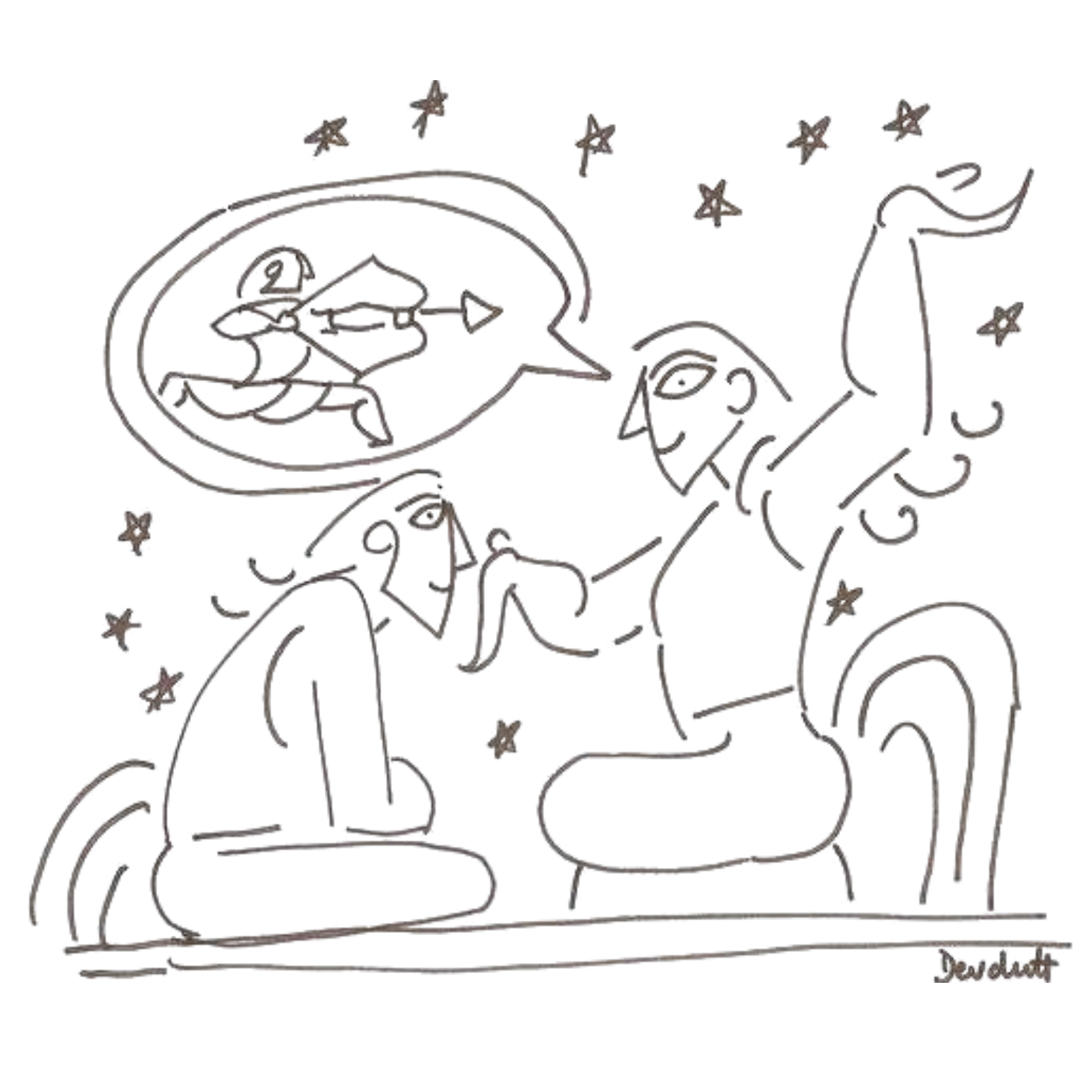
Published in Devlok, Sunday Midday on August 15, 2010.
Every time I cross the famous Sealink of Mumbai, I find on either end, close to the sea, couples engaged in various stages of intimacy, from heart-warming tenderness to brazen displays of lust. Overlooking them are grand houses that less than 1% of Mumbaikars can afford and acres of shanty towns that offer no privacy. This is the only place where they can be alone — in public, as cars whiz past, too intent on reaching the destination to stop and ogle.
There is political mileage and moral high ground and perhaps publicity to be obtained by assaulting these young couples and shoving them away. But I feel these couples are a reminder of our humanity. It is that moment when we do not want to be seen as members of society — as brothers, sisters, sons or daughters. We just want to be human beings bursting with unchecked, unrestrained desire.
Such intimacy is part of Indian temple architecture. Whether it is the temple of Konark in Orissa or that of Khajuraho in Madhya Pradesh, the artisans have embellished the walls with images of lovers in various stages of embrace. They have been placed there deliberately, to catch the gaze of the devout who enter the shrine. Why? To titillate, to communicate, to provoke thought? No one is quite sure.
One explanation is that these are remnants of fertility rites meant to enhance the power of the temple. Another explanation is that it is sex education for the masses who visit the temple. Perhaps it was advertising for the devadasis or sacred courtesans who supplemented the income of the temple. Perhaps they were magical talismans meant to keep demons away. Perhaps they were meant to please Indra, god of the sky, who had a roving eye, so that he did not strike the tall roofs with lightening. Perhaps they were merely expressions of pleasure, one of the four aims of life — the other aims being ethics, economics and spirituality. Perhaps they are codes of Tantrik practices, metaphors for deeper metaphysical thought. Perhaps they are all of the above, or maybe, none of the above. No one is completely sure.
The British were convinced that this was proof of ‘Hindoo’ decadence. Many of our nation’s founding fathers felt ashamed. A group of overzealous social reformers once planned to raze or deface or bury such temple carvings. It is said that Gandhiji supported such action. But then Rabindranath Tagore wrote an impassioned plea that, good or bad, moral or immoral, this was a national treasure that we could not wish away. We had to preserve it. And so it has survived, continuing to baffle us as they have baffled onlookers for hundreds of years.
The astute observer will notice that the lovers — of stone on temple walls and of flesh on the Sea-link — do not look at you. They are lost in their own pleasure. By looking at them, we are the intruders. We are the judge and the jury. These two sets of lovers are thus manifestations of Prakriti, nature, in all her myriad glory. Nature is about instinct, about desire unrestrained by law and custom. Nature does not judge. We do, and our ability to judge is also a reminder of our humanity. We can, if we wish, celebrate the love or condemn it as lust. Depending on the chosen measuring scale, either judgement can be divine or inhuman.