Published in Speaking Tree on March 27, 2011.
Every Hindu ritual ends with three words, “Shanti, Shanti, Shanti-hi,” which is conventionally translated as “Let there be peace, peace, peace.” Why is the word repeated three times? And can there truly be peace in the world?
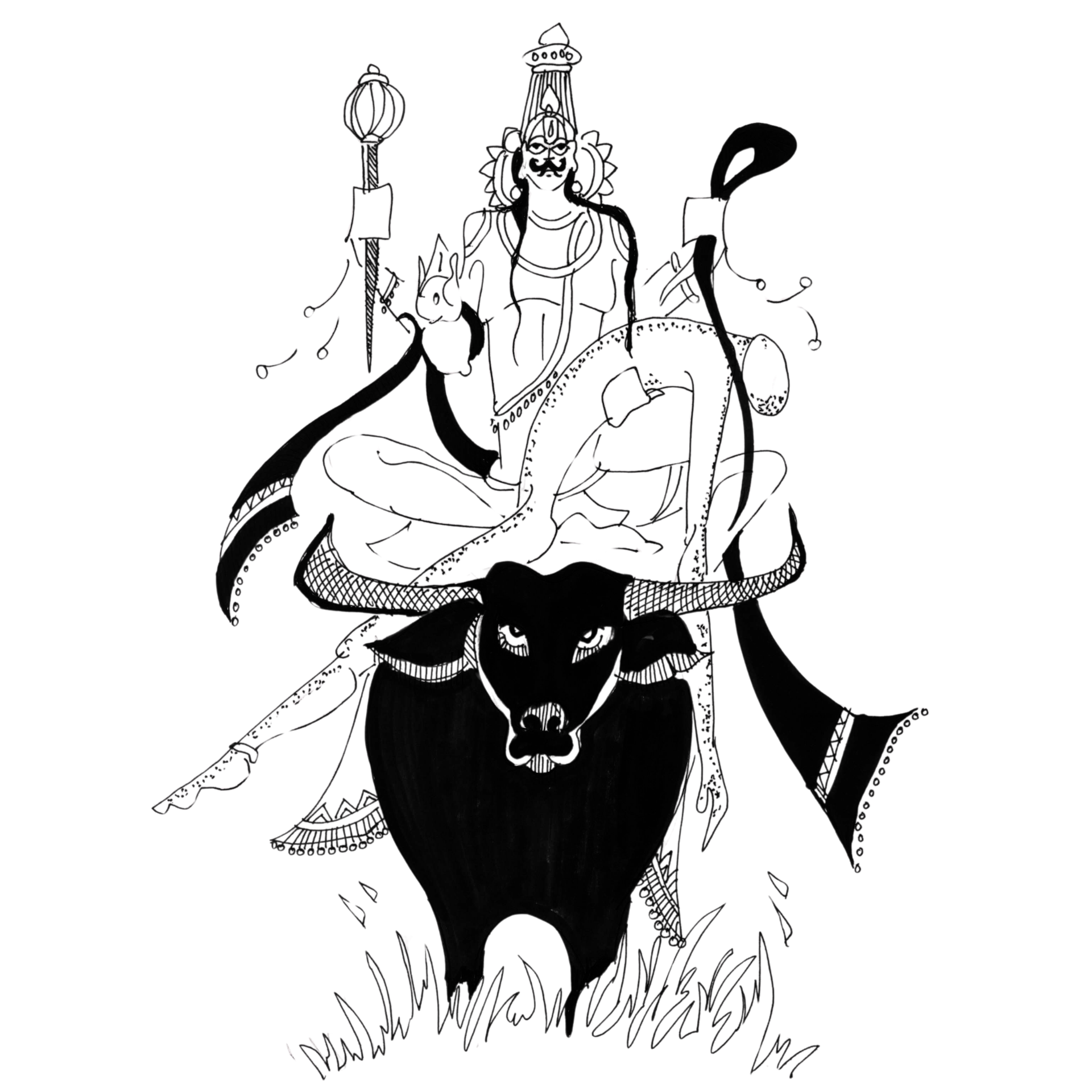
To assume that a world of peace can ever exist is consdiered naïve in Hinduism. To survive, every creature needs food. To get food, animals have to turn into predators and kill. Violence plays a key role to support life. As long as there is need for food, there will be predation, hence violence, hence no peace. Humans kill more than other living creatures because we hoard more food than we need to live, to insure ourselves against future scarcity. Every field, orchard, garden that provides us with food is established by destroying an ecosystem. Raw materials for industry can only be provided by destroying ecosystems.Human society is thus built on violence. Hinduism acknowledges this truism, which is why Hindu gods bear weapons in their hands. With such a pragmatic approach to violence, why do Hindu rituals repeat this chant for peace? And why three times?
In Shiva temples, the bilva sprig is offered to Shiva. The sprig has three leaves. Shiva’s sacred mark comprises of three horizontal lines. Shiva holds a trident which has three spikes. Shiva has three eyes — the left, the right and the central. He is called Tripurantaka — destroyer of the three cities. Perhaps the secret of chant for triple peace rests here.
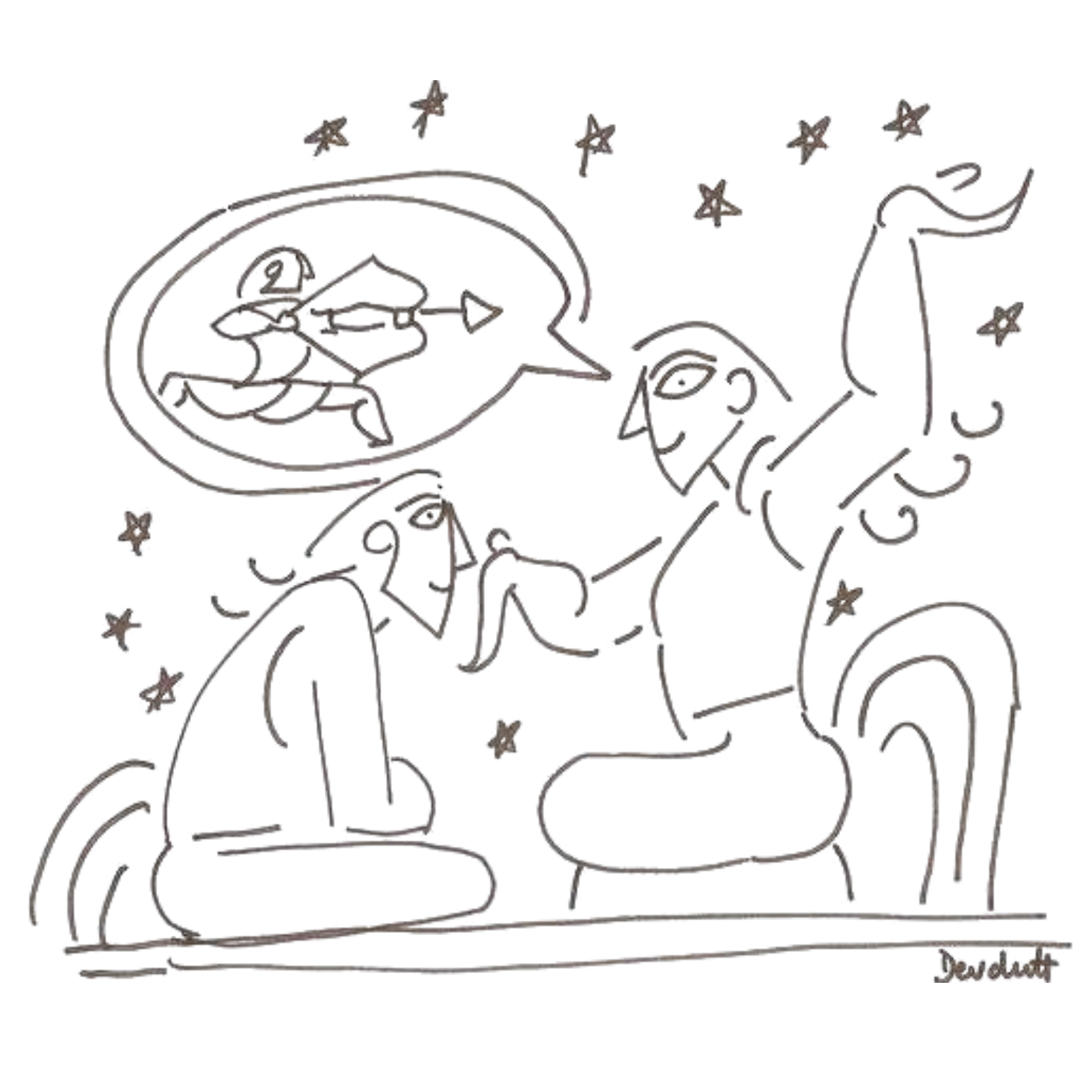
Shiva is the archer who struck down three cities with a single arrow. The bow is the symbol of balance. To shoot it one needs focus. To shoot three cities with a single arrow, one needs to be patient and aware until the three cities are perfectly aligned. All these characteristics suggest that Shiva’s archery is a metaphor for yoga. Yoga quietens the mind so that we are aware, patient, balanced and focussed. In this state, we discover the three cities that we inhabit.
The three cities are: our body, all things over which we claim ownership and all things over which we do not claim ownership. In other words, “me, mine and not-mine.” Ownership is human delusion — humans believe they have legitimate rights over the earth and hence have the notion of property that we can possess, buy, sell and bequeath to the next generation. Property is a cultural concept not a natural concept. This is humanity’s great delusion.
Yoga helps us realize that we own nothing in his world. We are born without posessions and we die without possessions. Realizing this we destroy “mine and not mine.” Yoga also helps us realize that “me” is not the body. We have a false identity, aham, the ego, that depends on the body and will die, and a true identity called atma, the soul, that does not depend on the body and will never die. True wisdom makes itself accessible when we outgrow our dependence on “me, mine and not-mine.”
So the chant, “Shanti, Shanti, Shanti-hi,” does not mean, “Let there be peace, peace, peace.” It means, “Let me come to terms with the limitations of me, mine and not mine.” It is the ultimate goal of Hinduism: to outgrow aham and realize atma.