Published in Sunday Midday on June 26, 2011.
Imagine if the moon never waned. I guess, we would not celebrate Kojagiri or Kartik Poornima or Sharad Poornima on full moon nights. And lovers would not sing songs equating the moon’s phases with the mood swings of their beloved. We would not have ‘Id ka Chaand’ or ‘Chaudhvin ka Chaand’ or ‘Ganesh Chaturthi’.
I wonder why our ancestors insisted on having a calendar based on the moon. Is there a message there? All things that wax eventually wane. All things that wane eventually wax. In Jain mythology, there is the concept of the world going through phases like the moon, Sushama Sushama representing boom times, the full moon, and Dushama Dushama representing bust times, the new moon. Not surprising since the Jain community have been traders for centuries and have understood, unlike modern management and business consultants, that market forces shift over time and are never permanent.
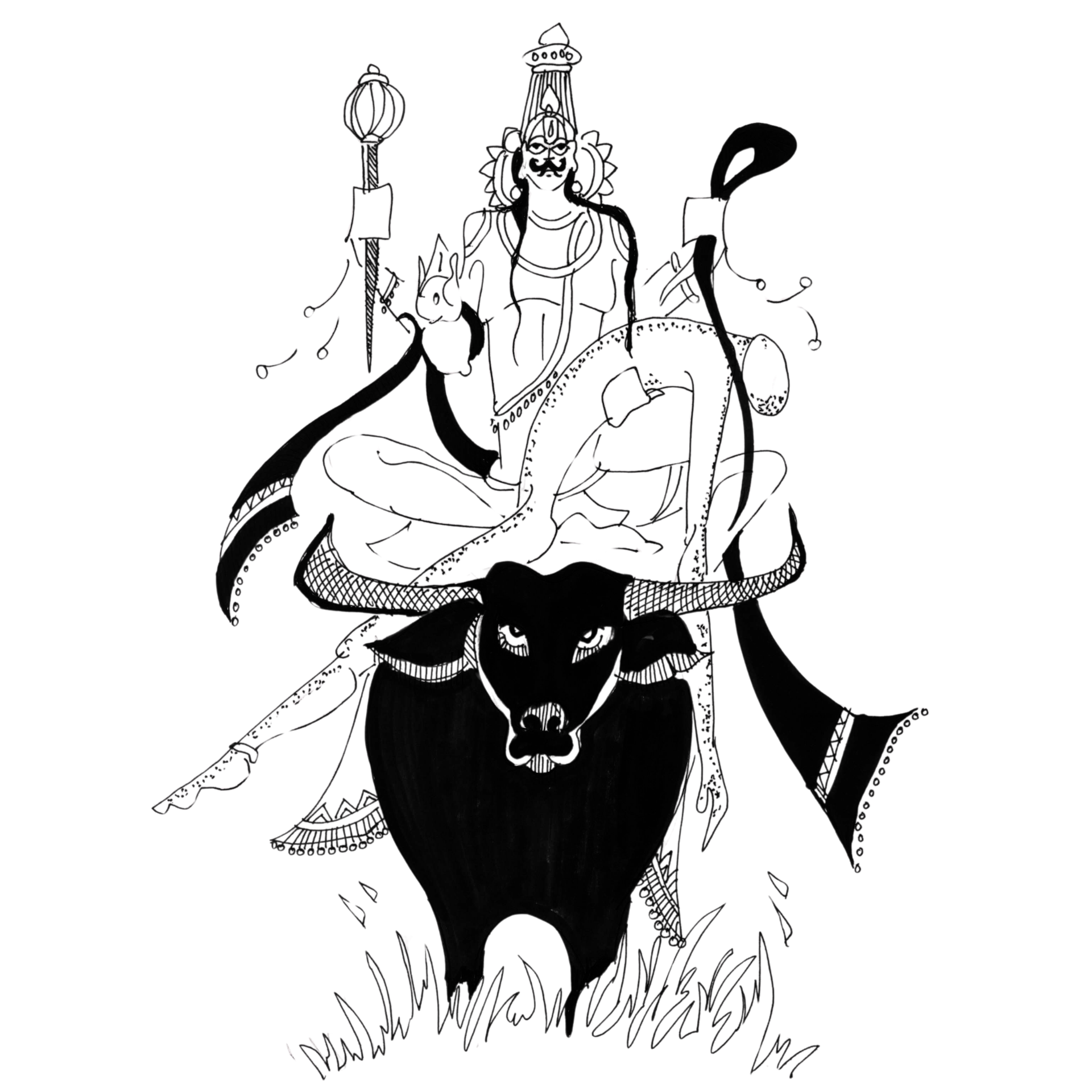
The story goes that Brahma in the form of Daksha had twenty-seven daughters, the Nakshatras. He gave them in marriage to Chandra, the moon-god. Chandra loved only one of the wives and so spent all his time with her annoying the other wives who complained to Daksha. Daksha insisted the Chandra treat all his wives equally. “I can’t,” said Chandra, “The heart cannot be controlled by rules.” Angry, Daksha cursed Chandra with the wasting disease, causing him to wane. Just when he was about to disappear, Chandra was advised to pray to Shiva, the hermit-god, who had given Sanjivani Vidya, or the science of regeneration to the Asuras because of which the Asuras could always be resurrected after being killed by Devas. Chandra prayed to Shiva and Shiva offered him a place on his forehead. Contact with Shiva’s forehead enabled Chandra to wax once again.
From that day on, Shiva came to be known as Chandrashekhar, one whose head is adorned by the crescent waning moon. Chandra is called Soma, which means the elixir of regeneration. Shiva is therefore also known as Somnath. As a reminder of the god who helped the moon wax and so can help regenerate life and bring back fortune once again into our lives, Shiva is worshipped on the 13th or 14th day of every waxing half. This is the Shiva-ratri, the most important of which is the Maha-Shiva-ratri that falls at the start of spring.
Chandra, they say, moves from one wife to another every night. He waxes when he comes closer to his favorite, Rohini. He wanes when he moves away from her. On full moon nights, he is with her. On new moon nights he is away from every wife. Thus the waxing and waning moon is a metaphor for romantic mood as well as virility.
If youth is the waxing phase and old age the waning phase, then when will we wax again. Next life? That’s a myth, isn’t it? We don’t believe in rebirth, soul or God, even if we clutch the Gita every night (just in case). We want to resist the waning process in this life. We want yoga and facelifts and hairweaving to perk us up. Unfortunately, gravity will always pull us down. We fight back. We get touchy when we are called ‘old’. We snap, “YOUR father is old.” Well, fathers usually are. Especially when sons grow up and have children of their own. It feels good to imagine grandchildren playing with wrinkles, rather than botox-drenched tissues. In some societies, it is noble to wane with grace.