Published in Speaking Tree, June 12, 2011.
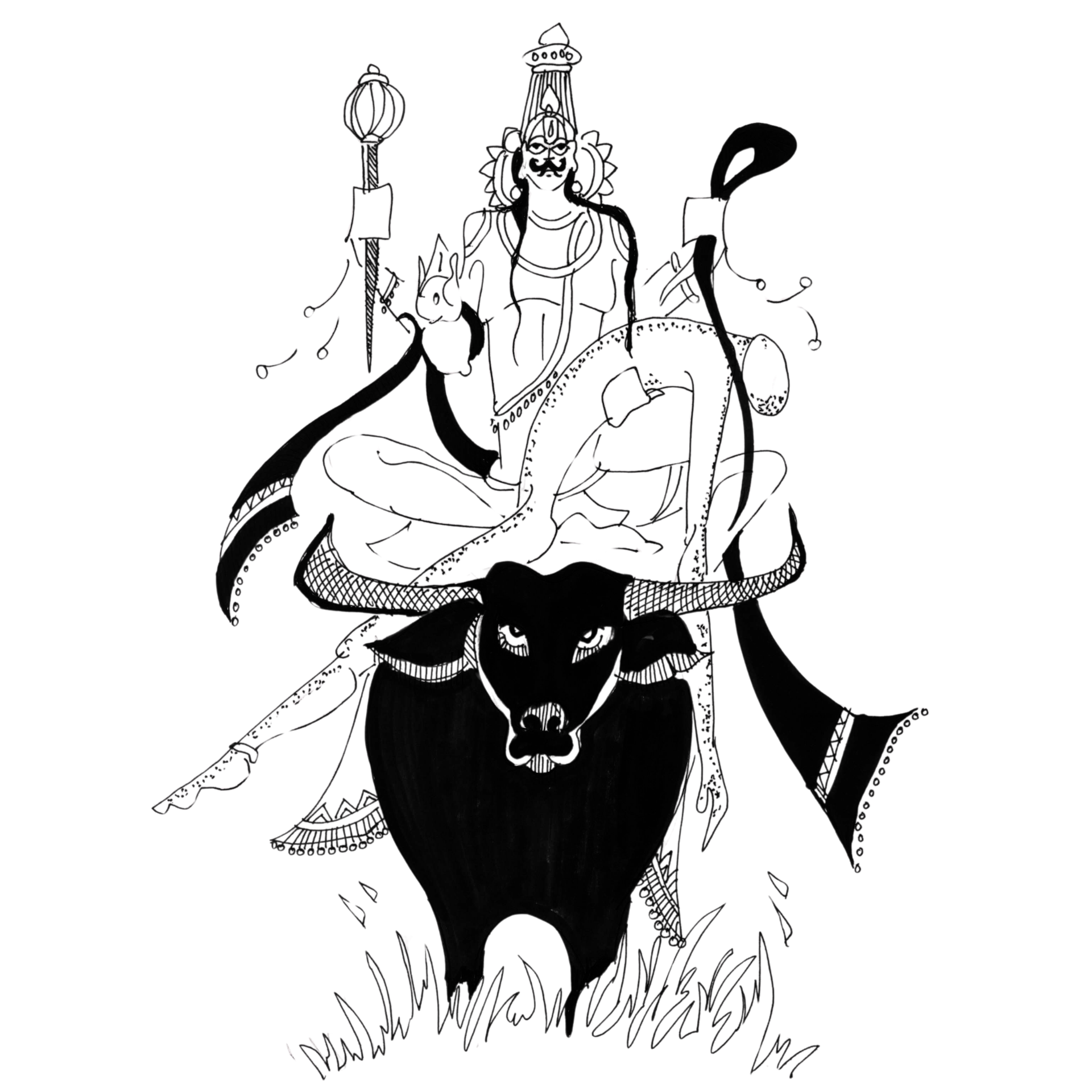
Nari-kavacha means a man for whom women (nari) serve as a shield (kavacha), defending him against possible attack. In all societies, killing women is considered a greater sin than killing a man, and clearly many have taken advantage of this belief to ensure their survival, the latest being Baba Ramdev.
The value for women over men has less to do with nobility and more to do with fertility. Sacrificial beasts were always male, never female, because the number of animals a farmer had depended not on the number of males he had but on the number of females. A single male is enough to ensure procreation of an entire herd.
In the Puranas, the womb of a woman is equated with the Amrita-kumbha, the pot containing the nectar of immortality. Through it the family tree survives, which is why the arrival of a bride into a household was associated with great pomp and ceremony. That is the reason why traditionally women were forbidden to participate in battle or carry arms.
But while economics made women valuable in ancient times, in modern times things have changed which is why so many people have no qualms about killing newborn baby girls, skewing the sex ratio of modern India against women. Be that as it may, even today, killing women is still condemned in most societies as an uncivilized act, which has encouraged many people to turn women into human shields.
The story goes that Parashurama, the warrior-priest, had sworn to kill all the Kshatriyas because their unrighteous behavior was burdening the earth. With his axe he hacked all the kings and warriors filling five great lakes with blood. But one man escaped. His name was Ashmaha. Some say the one to escape was Ashmaha’s son Balik. He knew that it was unrighteous to kill a woman. Parashurama who wanted to establish righteousness on earth would therefore never harm a woman. So he ran into the women’s quarters, hid behind the women and escaped Parashurama’s wrath. Because of this he came to be known as Nari-kavacha. He also came to be known as Mulaka, the origin, as all the widows of the warriors killed by Parashurama went to this sole male survivor to beget a child. From him, sprang the next line of Kshatriyas.
In Greek mythology, a mother turns her son into Nari-kavacha in order to protect him. The nymph Thetis dressed her son, Achilles, up as a girl and kept him hidden in the women’s quarters of King Lycomedes, when she learnt that the Greek warlords were conscripting young men to do battle against the city of Troy. While in the women’s quarters, Achilles seduced the king’s daughter who bore his only son, Neoptolemus. The Greeks knew that Achilles was a great warrior and were determined to find him. The clever Odysseus therefore entered the women’s quarters disguised as a peddler of women’s wares. Amongst the comsetics and the jewellery and the clothing was a sword and spear. Odysseus noticed that one of the girls, a red head called Pyrrha, kept eyeing the weapons; he concluded the girl was Achilles in disguise. To draw Achilles out, Odysseus signalled his colleagues to blow war trumpets from outside the palace gates. On hearing the war trumpets, Achilles, bored of female company and itching to do battle, grabbed the sword and spear and ran out, unmindful of his female attire. The Greek soldiers caught hold of him and encouraged him to join in the expedition against Troywith promises of glory.